
Spiritual life can include faith, prayer, a sense of connection, time in nature or questions about what matters to you. You may have an established practice, be exploring something new or be unsure what you believe. There is room to begin with that uncertainty.
Strengthening this part of your life does not require becoming constantly peaceful or finding one final purpose. Look for practices that leave room for your needs, responsibilities and relationships. A meaningful practice can sit alongside practical help when life is difficult.
On this page
Name what matters to you
Start with a specific question: “What would I like to give more attention to this week?” Your answer might be honesty in a conversation, care for a neighbour, gratitude, learning or having a little quiet. You do not need to describe the meaning of your whole life before making one choice.
Try writing three short lines:
- Something that matters to me is…
- A situation where I want to express it is…
- One action within my reach is…
For example, if kindness matters, the action might be checking whether a friend wants company. If fairness matters, it might mean reconsidering how tasks are shared at home. Values become easier to explore when they connect with something you can actually do.

Choose a manageable practice
You could read a passage that matters to you, pray, listen to music, sit outdoors or keep a brief journal. Choose according to your beliefs, access and energy. A familiar room or a view from a window can be enough; travel and expensive equipment are optional.
If you want to try meditation, begin with a short period in a comfortable position. You can notice a sound or the contact of your feet with the floor without forcing your mind to become empty. Keep your eyes open if that feels more comfortable, and stop if the practice becomes distressing.
The National Center for Complementary and Integrative Health’s meditation guide discusses possible benefits and limits, including unwanted experiences. Meditation should not replace medical care or delay getting help for a health concern.
Make room for connection
Meaning may come through other people as well as private reflection. You might join a faith gathering, talk with a trusted friend, share a meal or take part in a community activity. Ask about accessibility, costs and expectations before committing.
Notice whether a group welcomes questions and respects different levels of involvement. You can appreciate a community while declining a role, a donation or a belief that does not fit. Belonging should leave room for your choices.
Respect your limits
Reflection can be private. You do not owe anyone an account of a painful experience, a confession or an explanation of your beliefs. Choose what you share and with whom, especially in public groups or online spaces.
Be cautious if someone uses spiritual authority to pressure you into secrecy, spending beyond your means or ignoring your own judgement. Pause, seek an outside perspective and keep access to people who support your freedom to decide.
Keep everyday care in view
A difficult mood is not evidence that your spirit is weak. Poor sleep, illness, grief, caring demands and money worries can affect how much energy you have for any practice. Sometimes the useful next step is food, rest, a practical conversation or an appointment.
You can pray and ask for help with childcare. You can value gratitude and still be angry about unfair treatment. Let your spiritual life make space for what is happening rather than requiring you to hide it.
Review what helps
After trying a practice, ask what you noticed. Did it give you room to think? Did it create another obligation? Was the setting comfortable? Change the duration, place or activity if needed.
There is no need to measure progress by unusual sensations or a perfect streak. A useful outcome may be a clearer request, a more considered decision or permission to rest. Choose one small practice you would like to return to, and leave room to revise it.
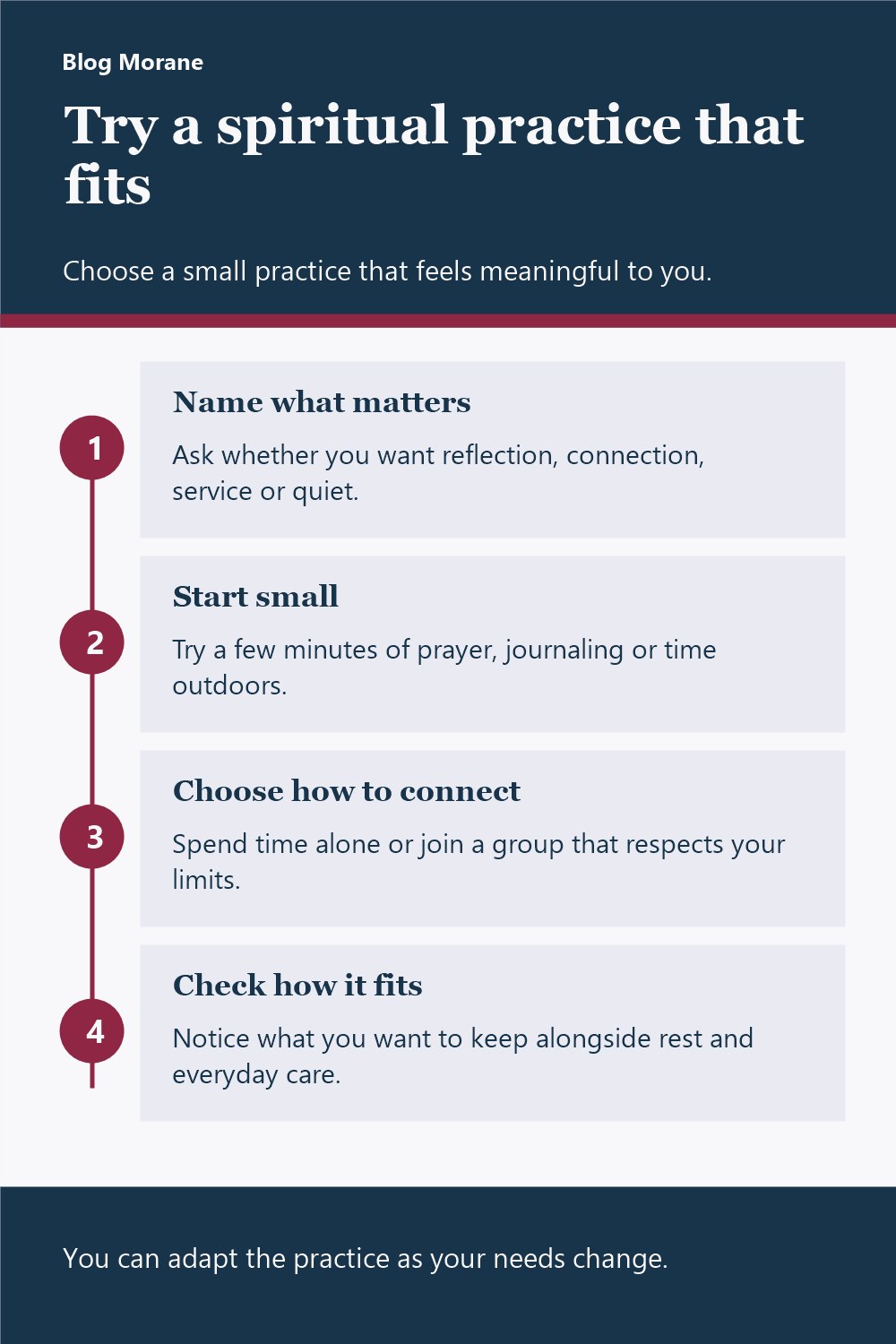
Read the infographic in text
Try a spiritual practice that fits Choose a small practice that feels meaningful to you.
- Name what matters Ask whether you want reflection, connection, service or quiet.
- Start small Try a few minutes of prayer, journaling or time outdoors.
- Choose how to connect Spend time alone or join a group that respects your limits.
- Check how it fits Notice what you want to keep alongside rest and everyday care.
You can adapt the practice as your needs change.