

Emotional intelligence can be a useful way to think about noticing feelings, understanding what may be behind them and choosing how to respond. In an everyday relationship, that might mean recognising disappointment before it becomes an accusation, or asking a question before assuming you know someone’s intention.
You do not have to feel calm all the time to communicate with care. These six skills offer small ways to practise. Start with one familiar situation and allow yourself time to learn; a difficult emotion or conversation is not a test of your worth.
On this page
1. Notice and name the feeling
Pause long enough to describe what is happening for you. “I feel hurt and worried” gives you more to work with than “Everything is terrible.” You may feel several things at once, and you may need time before you can name them.
Look at the situation as well as the feeling. Are you tired, rushed, left out or dealing with an actual broken agreement? Naming an emotion can help you decide what needs attention without making the feeling itself a problem to eliminate.
2. Check the story you are telling yourself
Separate what you observed from what you inferred. “They have not replied this afternoon” is an observation. “They do not care about me” is one possible interpretation. Ask what else could explain the delay and what information you still need.
The NHS guide to reframing unhelpful thoughts suggests examining the evidence and considering other perspectives. A fairer interpretation should still leave room to recognise real problems, including repeated disrespect or broken promises.

3. Make room before you respond
If you feel overwhelmed, consider a short pause, a drink of water or a quieter setting. Choose an action that is available to you. You do not have to force a particular breathing exercise or remain in a conversation that feels unsafe.
When it is safe and practical, explain the pause: “I want to talk about this, but I need a little time. Can we come back to it after dinner?” Agree on a realistic return rather than leaving someone guessing. The aim is to create room for a response you can stand behind.
4. Express a feeling and a clear need
Try describing the event, its effect and a request: “When our plans change without a message, I feel unsettled because I cannot organise my evening. Could you let me know as soon as you can?” Keep the request specific enough for the other person to answer.
You can explain your needs while accepting that someone may disagree. Discuss what is workable and decide what limit you need to set. Our guide to assertiveness and confidence offers more examples of clear requests and respectful disagreement.
5. Listen without assuming you know
Ask an open question such as “What was that like for you?” Listen for what the person actually says, then check your understanding: “Have I understood that you wanted more notice?” Give them room to correct you.
You can acknowledge someone’s feeling without agreeing with every conclusion or accepting hurtful behaviour. Avoid diagnosing them, explaining away their experience or turning each pause into your own story. They may want understanding, practical help or simply time to think.
6. Repair mistakes and practise a small change
If you interrupt, accuse or speak harshly, name the specific action and apologise for it. “I assumed your intention and raised my voice. I am sorry” is clearer than asking the other person to stop feeling upset. Explain what you will try differently and follow through.
After a conversation, notice one thing that helped and one thing to adjust. You cannot control another person’s response, and there is no deadline for mastering emotions. If recurring distress or conflict is affecting daily life, appropriate professional support may help you understand the pattern.
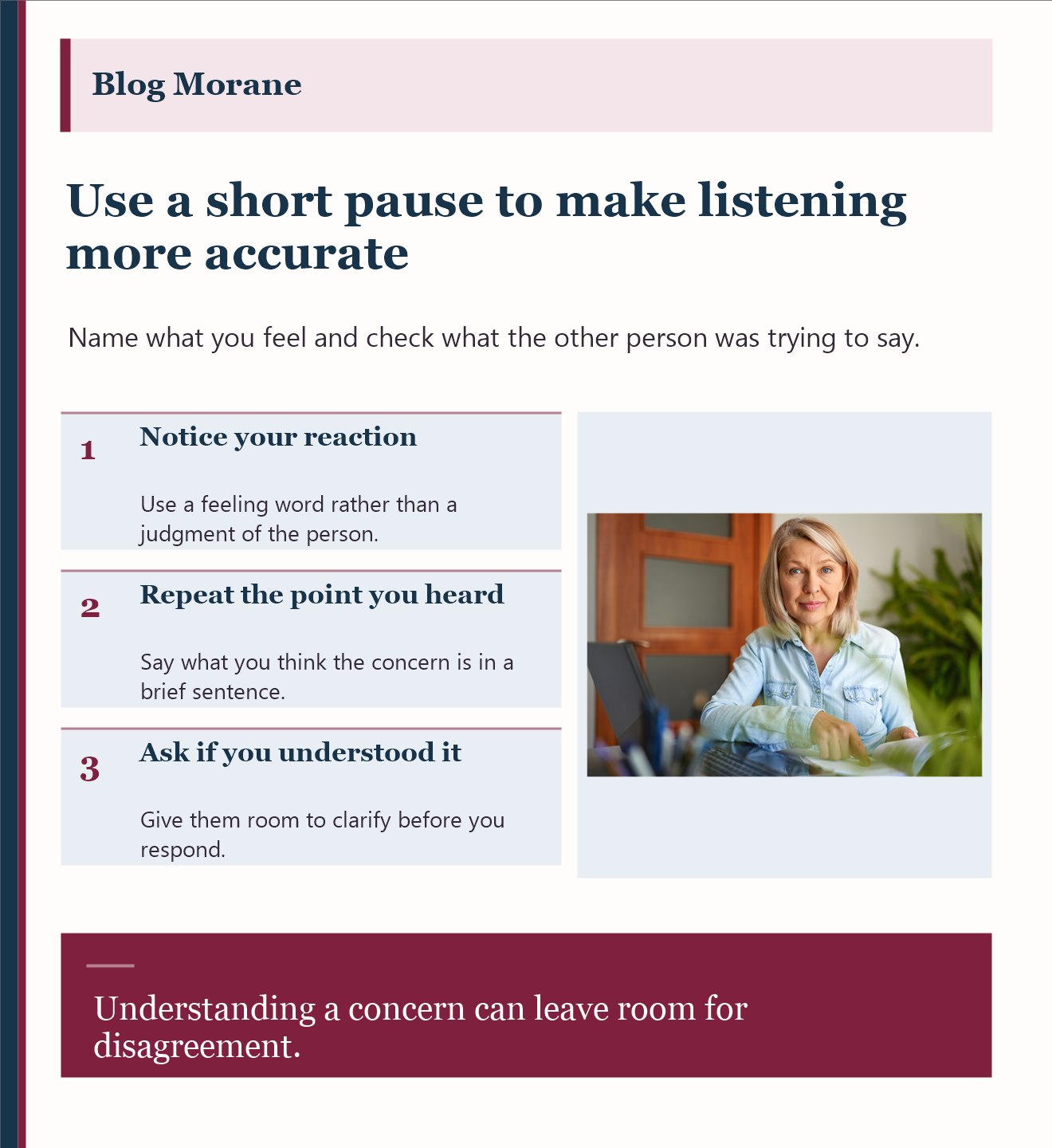
Use a short pause to make listening more accurate
If a person turns down a plan and you immediately feel dismissed, check what they said before answering. “I heard that you can’t come Thursday. Is the concern the timing or the plan itself?” can give you information without putting words in their mouth.
When you need space to settle, say when you can come back if that is safe. Ask both people to speak for themselves rather than deciding what the other person is feeling.
Read the infographic in text
Use a short pause to make listening more accurate
Name what you feel and check what the other person was trying to say.
- Notice your reaction Use a feeling word rather than a judgment of the person.
- Repeat the point you heard Say what you think the concern is in a brief sentence.
- Ask if you understood it Give them room to clarify before you respond.
Understanding a concern can leave room for disagreement.