

Mixed messages in dating can leave you guessing about where you stand. Start with what happened, choose the question that would make a difference, and give the other person room to answer it.
Begin with the behaviour you can describe
When you’re getting to know someone, it can be confusing when their words and actions don’t seem to match. Instead of trying to figure out what they’re secretly thinking or feeling, pay attention to what’s actually happening between you. For example, if you’ve talked about getting together several times but haven’t made any definite plans, that’s something you can discuss without accusing the other person of playing games.
Try focusing on recent situations or behaviors that keep happening instead of looking back through every text message or social media post for clues. Sometimes spending too much time analyzing little details can make things even more confusing. What matters most is recognizing the behavior that’s causing uncertainty and deciding if it’s something you need to talk about.
Decide whether you need a conversation
Sometimes relationships feel confusing because two people haven’t discussed what they actually want. You might think you’re building a serious relationship while the other person believes you’re still casually getting to know each other. If neither of you has talked about your expectations, it’s easy for misunderstandings to happen.
In situations like these, having an open conversation can help you understand where things stand. For example, you might ask if the other person is interested in a committed relationship or if they’re still keeping their options open. You don’t have to demand an immediate commitment, but it’s reasonable to want to know if you’re both looking for the same thing.
But there are also times when someone has already told you what they want, even if their actions sometimes make you question their answer. If someone clearly says that they aren’t interested in a serious relationship, sending affectionate messages or spending time together doesn’t necessarily mean they’ve changed their mind. You might hope that their feelings will become stronger, but it’s important to take their words seriously unless they clearly tell you something has changed.
Ask for the information you actually need
Before you have a conversation, ask the actual question you’re wanting to know. Do you want to know if they want another date or if they want to be exclusive? Keep the questions so they can be answered.
You don’t have to have a future promise to have a conversation. Focus on the intentions and the real next step. A person might be interested but not be able to give you what you need. Learning this early can be helpful, even if it feels disappointing.
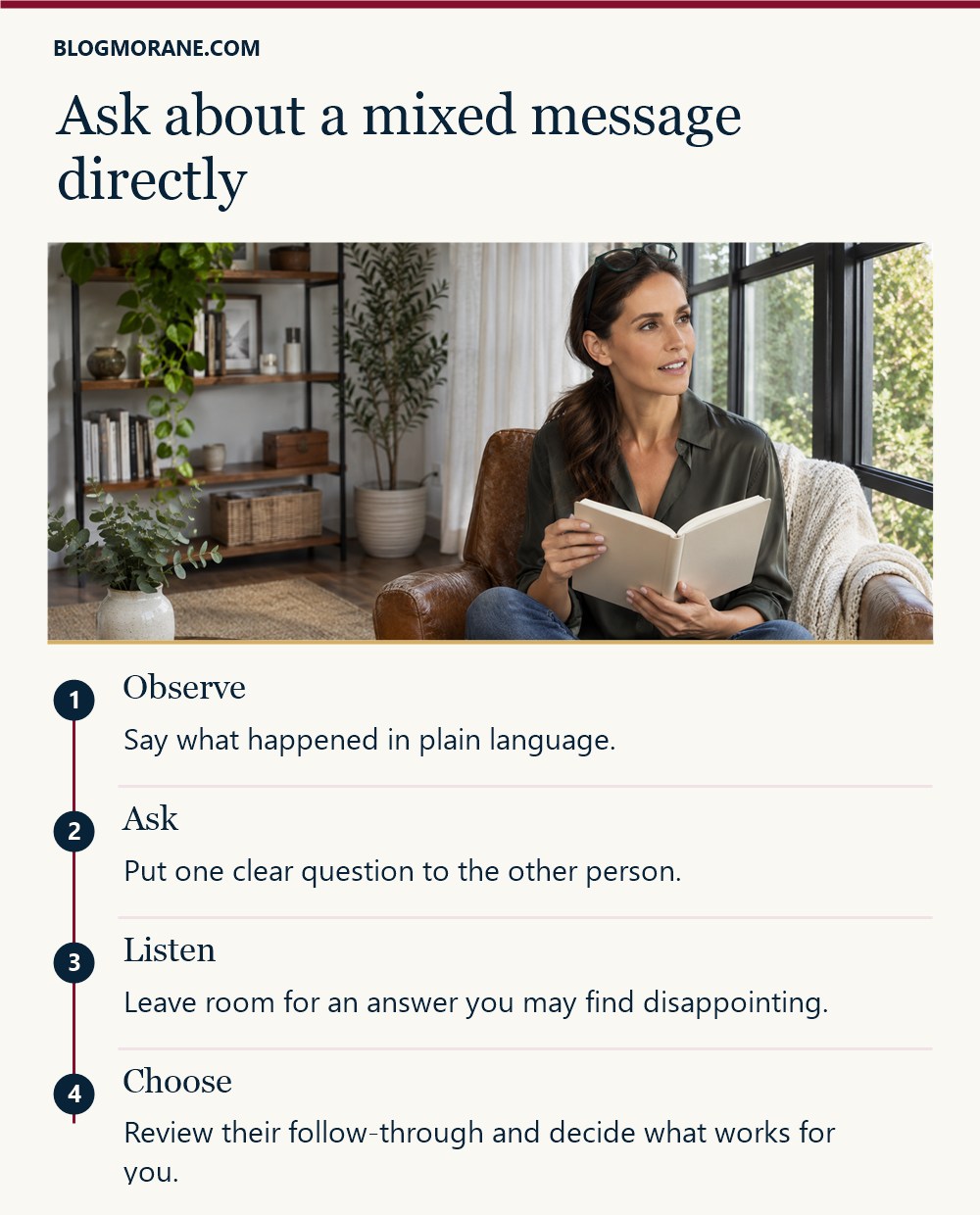
Read the visual guide as text
- Observe. Say what happened in plain language.
- Ask. Put one clear question to the other person.
- Listen. Leave room for an answer you may find disappointing.
- Choose. Review their follow-through and decide what works for you.
Choose a calm time and place
Ask when there’s enough time and privacy to have a conversation. Don’t start an important discussion when you’re in a rush, intoxicated, or unable to give it attention.
According to the love is respect guide to communication it emphasizes thoughtful communication and warns that general conversation tips may be unsafe in an abusive relationship. Choose the channel with your circumstances in mind.
A call, a written message or an in-person conversation works for different people. You can start by having a discussion, such as: “I’d like to talk about how we make plans. When would be a good time?” If you’re afraid of how the person’s going to respond, get support instead of thinking that the conversation is the best route.
Talk about communication preferences
Communication can become a problem in relationships when two people have different expectations about how often they should talk. One person might enjoy texting throughout the day, while the other prefers talking on the phone in the evening or only sending messages when there’s something important to discuss. These differences don’t automatically mean that someone isn’t interested or that they’re intentionally ignoring the other person.
Think of a woman named Ashley enjoys sending messages to her boyfriend throughout the day because it helps her feel connected to him. Her boyfriend, Michael, works long hours and doesn’t always have time to respond until he gets home. Ashley sometimes feels disappointed when she doesn’t hear from him, while Michael doesn’t understand why she expects him to respond so often.
Instead of allowing the situation to turn into an argument, Ashley could explain that she doesn’t expect Michael to text while he’s busy at work, but she’d appreciate hearing from him when he has time. Michael might also explain when he’s usually available and what kind of communication works best with his schedule. This gives them an opportunity to find something they’re both comfortable with.
Listen to the answer and watch what follows
Listen before you prepare an argument. If something’s vague, ask them to clarify. You could say something like, “What do you mean when you say you want to take things slowly? What does that look like over the next few weeks?”
Pay attention if the person answers the question or replaces it with criticism, compliments, or a different topic. Their language can still be meaningful, but it might not answer the questions about commitment.
You feel like you’re not getting your answers. Try to summarize it by saying something like, “It sounds like you enjoy seeing me, but you don’t want to be exclusive. Is that right?” This allows you to understand what’s going on without requiring them to agree with what you want. Once you have the answer, decide what you want. You don’t have to talk the other person into giving you more before you are allowed to step back.
Choose how long you are willing to wait
When you’re dating someone and aren’t sure where the relationship is going, it can be difficult to know how long you should wait for things to change. Maybe you’ve been spending time together for several months, but the other person still doesn’t seem sure about what they want. While it’s okay to give someone time to figure out their feelings, you also have to think about what you want from the relationship.
For example, imagine that a woman named Nicole has been dating a man named Trevor for a few months. They enjoy spending time together, but whenever Nicole brings up the possibility of a serious relationship, Trevor tells her that he isn’t ready to make a commitment. Nicole wants something more serious, and she’s starting to realize that continuing to wait is making her unhappy.
Instead of trying to convince Trevor to change his mind, Nicole could say, “I really enjoy spending time with you, but I’m looking for a serious relationship. I understand that you’re not ready for that, but I don’t think continuing to date is what’s best for me.” This allows her to explain what she wants without pressuring Trevor into making a commitment he doesn’t want.
Keep the conversation private and safe
It’s also important to respect the other person’s privacy when asking for advice. You don’t have to share private conversations, personal photographs, or identifying information to explain that you’re feeling confused about a relationship. Sometimes describing the situation in general terms is enough for someone to offer support.
The important thing is using advice to help you understand your options instead of allowing it to make decisions for you. You can listen to other perspectives while still paying attention to what the person you’re dating actually says and does. In the end, an honest conversation and your own judgment are much more useful than repeatedly searching for reassurance about feelings that haven’t been clearly expressed.
Related reading. After Heartbreak: Support, Rest and Small Next Steps.
Frequently asked questions
1. How can I respond to mixed messages in dating?
Name the behaviour you observed and ask one direct question. Then consider whether their answer and later actions give you the clarity you need.
2. What can I say if plans keep falling through?
Try “We’ve talked about meeting several times. Do you want to choose a day this week?” Use their answer to decide whether to keep making space for it.
3. Are different texting habits a bad sign?
People can have different preferences about texting. Talk about the level of contact that works for you and notice whether you can reach a workable agreement.
4. What if they say they’re unsure?
Take the answer seriously. Decide whether you are comfortable with uncertainty and how long you want to leave the possibility open.
5. How do I know when to stop asking?
If the same question has already been asked clearly and the pattern continues, you can choose a boundary based on the information you have.