

Choosing whether to build a life with someone involves feelings, conversations and experience over time. Attraction matters, but so does what happens when you disagree, need help or want something different.
No checklist can guarantee a lasting relationship. These questions can help you understand each other and notice where more discussion, time or support is needed. You can decide that a relationship does not fit without proving that either person is a bad person.
On this page
Notice everyday respect
Look beyond grand gestures. Can you state a preference, keep some things private and say no without being punished? Does the person listen when an issue matters to you, even when it seems minor to them?
Respect goes both ways. You can take an interest in one another without sharing every hobby or agreeing on everything. Notice whether both people have room to be themselves.
The National Domestic Violence Hotline’s relationship guide describes healthy relationships through communication, respect, equality, boundaries and consent. It also explains differences between unhealthy and abusive behaviour.

Discuss the life you each want
Choose a few important topics at a time. You might discuss where you want to live, whether either of you wants children, work patterns, religion, leisure or how much time you prefer to spend together.
Ask what a preference means in practice. “Family is important” could involve weekly visits, financial help, future caring responsibilities or something else. “I want children” needs more conversation about expectations and timing.
You do not have to match in every way. Identify the differences you can live with, the ones that need a shared plan and the ones that may make the relationship unsuitable for either of you.
Talk about money, work and care
Discuss how you would share ordinary responsibilities. Who notices what needs doing? How would decisions be made if one person earned less, became ill or took on more caring work?
Fairness need not mean identical contributions. It does involve both people having a say and being able to discuss needs without threats or humiliation. Revisit arrangements when circumstances change.
Before taking on shared commitments, make sure you understand what you are agreeing to and have time to ask questions. Get appropriate independent advice where needed, especially when a decision has significant legal or financial consequences.
Look at disagreement and repair
Ask how each of you handles a difference of opinion. Can you listen, take a pause when needed and return to a discussion? Does an apology lead to a change in behaviour?
Repair can include naming what happened, acknowledging its effect and agreeing on a practical change. It does not require forgetting a serious concern or pretending that repeated harm is a misunderstanding.
If there are threats, intimidation, sexual pressure or control, consider confidential support focused on safety. You do not need to wait for a larger commitment before taking those behaviours seriously.
Keep room for other relationships
A partnership can coexist with friendships, chosen family and independent interests. Talk about visits, privacy and the amount of time you each need with other people or alone.
Family relationships can be supportive, strained, distant or absent. Approval from relatives is not the only measure of a good partnership. Consider their specific concerns where useful, while keeping your own safety, values and decisions in view.
Discuss intimacy without judgement
Talk about affection, sexual expectations, consent and privacy at a pace that feels comfortable for both of you. You can have different histories without treating either person as less worthy of respect.
Focus on current needs, agreements and questions that affect your shared life. Neither person should feel pressured into sexual activity, disclosure or a commitment to prove love. Seek qualified health advice about specific health concerns.
Choose a pace that allows thought
Make space for ordinary experience together and for private reflection. Notice whether actions match the conversations you have had. If an answer is unclear, you can ask again or take more time.
Love does not require agreeing to every next step. You can choose to continue, change the pace or end a relationship. A thoughtful decision leaves room for what both people want and for information you are still learning.
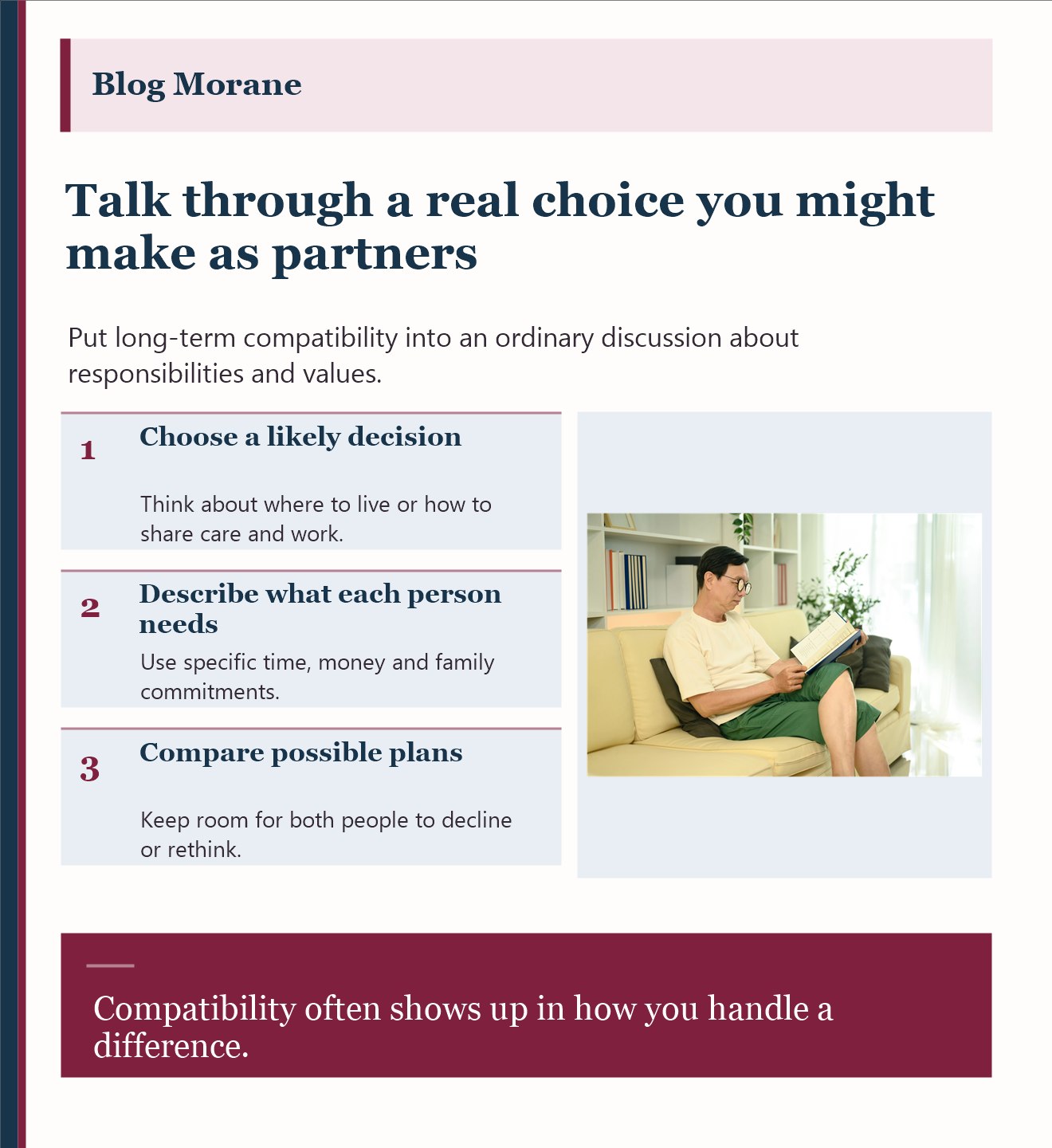
Talk through a real choice you might make as partners
Before deciding on a future together, discuss a specific change like shifting work hours to help a parent. Compare how each option would affect travel, money and time to yourself. Include anything you would need support with.
Pay attention to the way you discuss the trade-offs. A workable conversation makes space for both people to say where they can adjust and what is important to keep.
Read the infographic in text
Talk through a real choice you might make as partners
Put long-term compatibility into an ordinary discussion about responsibilities and values.
- Choose a likely decision Think about where to live or how to share care and work.
- Describe what each person needs Use specific time, money and family commitments.
- Compare possible plans Keep room for both people to decline or rethink.
Compatibility often shows up in how you handle a difference.