

Feeling jealous, afraid of losing someone or unsettled by a delayed reply does not give you the right to control them. Possessive behaviour can include checking private messages, demanding constant updates, restricting friendships or continuing contact after someone has asked you to stop.
If you recognise something you have been doing, begin with the specific behaviour. You can take your feelings seriously while choosing actions that respect the other person’s privacy, safety and freedom to decide.
On this page
Describe the behaviour clearly
Write what happened without a justification attached: “I sent repeated messages after they asked for space,” or “I looked through their phone without permission.” That is more useful than saying you were “just being protective.”
Keep feelings, assumptions and actions separate. “I felt anxious” describes your experience. “They must be cheating” is a conclusion that may lack evidence. “I demanded their location” describes something you chose to do.
Also consider the effect. Did the person change a plan to avoid your reaction, feel pressured to explain ordinary activities or lose privacy? Their discomfort matters even if you intended to feel reassured.
Interrupt the next controlling action
Plan what you will do when the urge to check or demand appears. Put down the phone, leave an unsent message in a private draft or take a pause away from the conversation. Do not use a break to punish someone or make them chase you.
Ask, “What am I about to do, and does it respect their choice?” You may still feel uncomfortable after deciding not to check. That discomfort is a reason to seek support, not permission to override a boundary.
If there is an actual immediate safety concern, respond to that evidence through appropriate local help. Ordinary uncertainty about a reply is different from evidence of an emergency.

Make requests that allow a no
You can discuss contact preferences: “Would a brief message when plans change work for both of us?” Listen to the response and consider an arrangement that does not require either person to be constantly available.
A request leaves room for refusal. A demand backed by guilt, threats or repeated pressure does not. If your expectations do not fit, you can discuss compatibility or choose to leave; controlling the other person is not a solution.
When you want reassurance, try a direct description: “I am feeling uncertain about where we stand. Could we talk about what we each want?” Their answer may be disappointing, but it remains theirs to give.
Respect digital privacy
Dating does not create automatic access to someone’s accounts, messages or location. Do not search their device, use a password without current permission or ask friends to monitor them for you.
Love is respect’s guide to digital boundaries recommends keeping passwords private and discussing online expectations with mutual respect. Boundaries can change, including after someone previously agreed to share access.
After a breakup or a request for no contact, do not bypass a block, create another account to reach them or show up unexpectedly. If practical responsibilities remain, use an agreed channel or seek suitable advice about how to manage them.
Take responsibility for repair
An apology can name the action and its effect: “I read your messages without permission. That invaded your privacy. I will stop accessing your account.” Avoid adding “but you made me worry.”
Follow through without requiring immediate forgiveness, praise or renewed trust. The other person does not owe you access to prove they accept your apology, and they are not responsible for supervising your behaviour change.
Notice whether the action actually stops. Replacing phone-checking with repeated questioning or asking someone else to check for you continues the pressure in another form.
Seek support and respect their decision
If control, intimidation, threats or stalking have become part of your behaviour, seek specialist help rather than relying only on reassurance from your partner. The National Domestic Violence Hotline’s resource on controlling behaviours discusses accountability, support and intervention programmes. You can also look for appropriate local services.
A person may decide to end the relationship or keep their distance. Respecting that decision is part of change. Support for your feelings should come from people and services who help you act responsibly, rather than encourage further pressure.
If someone else is controlling or frightening you, their behaviour is not your fault. Consider confidential support from a local relationship abuse service and seek urgent local help if you are in immediate danger.
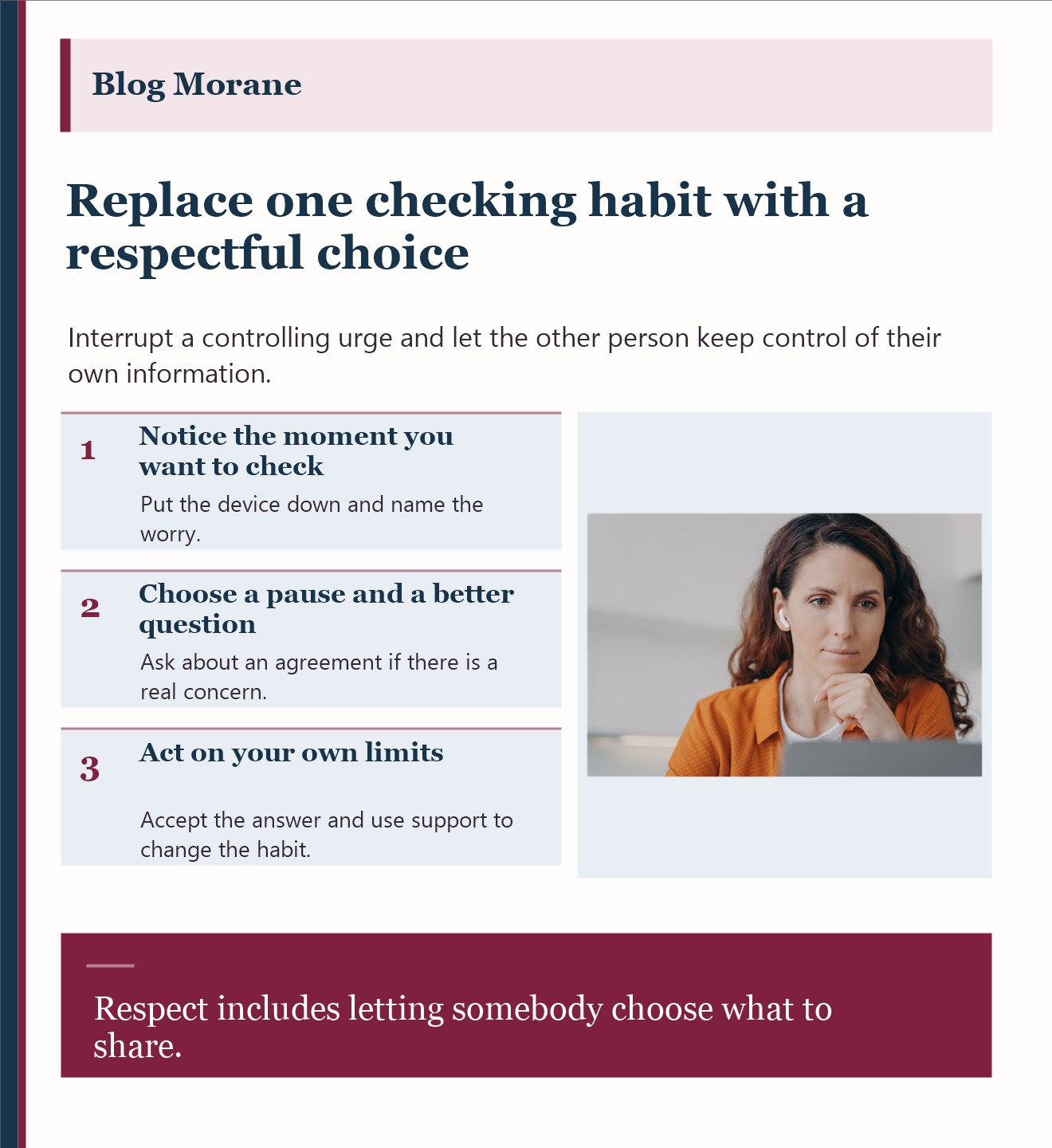
Replace one checking habit with a respectful choice
If you want to look through a partner’s messages when they leave the room, step back and ask yourself what you are trying to learn. Later, if the issue is a shared plan, ask about the plan directly without demanding access or checking location history.
Take responsibility if you have already crossed a boundary. Give the other person room to decide how to respond and seek appropriate help to change repeated monitoring or pressure.
Read the infographic in text
Replace one checking habit with a respectful choice
Interrupt a controlling urge and let the other person keep control of their own information.
- Notice the moment you want to check Put the device down and name the worry.
- Choose a pause and a better question Ask about an agreement if there is a real concern.
- Act on your own limits Accept the answer and use support to change the habit.
Respect includes letting somebody choose what to share.