

Self-confidence can be uneven. You might feel comfortable helping a friend but uncertain about speaking in a meeting, meeting someone new or asking for what you need. That does not make you a weak person or mean you have failed to believe in yourself enough.
A useful starting point is one situation you want to handle with a little more choice. Identify the skill, information or support involved, then choose a manageable way to practise. Confidence does not need to arrive before every action, and feeling confident cannot guarantee someone else’s response.
On this page
1. Choose a specific situation
Replace a broad demand such as “Be more confident” with something you could actually do: ask a question in a meeting, tell a date your preference or request clearer instructions. Name what feels uncertain about that moment.
You may need practice, but you may also need information, an accessible format, more time or a different environment. Confidence alone cannot resolve an unreasonable workload, discrimination or someone repeatedly dismissing you. Consider what would make the situation more workable before turning it into a test of your character.
Choose something that matters to you. Becoming the loudest person in a room or appearing relaxed in every social setting does not have to be your goal.

2. Make practice manageable
Break an ordinary, safe task into a short sequence. For a conversation, that might mean preparing an opening, saying it aloud and then using it with someone you trust. For an unfamiliar process, it may mean finding the instructions and asking one practical question.
- Prepare: write a question or outline the point you want to make.
- Try: use it in a setting where you have room to pause or ask for help.
- Adjust: notice what was difficult and choose one thing to change next time.
Decide what “enough for today” means before starting. One contribution to a discussion may be a more useful aim than speaking fluently throughout it. Leave time and energy for the rest of your day.
If fear of a disappointing result keeps taking over, our guide to fear of failure and realistic next steps explores preparation and the difference between manageable discomfort and a real risk.
3. Use fairer self-talk
Notice when a thought about an event becomes a verdict about your whole self. “I did not explain that clearly” describes something you can work on. “I am useless” gives you no practical next step.
The NHS guide to low self-esteem suggests examining negative beliefs, looking for evidence that challenges them and considering how you would respond to a friend. You can try a balanced statement without forcing yourself to feel positive.
For example: “I lost my place, but I asked to start again and finished the point.” Include what was difficult as well as what you managed. You do not need to repeat a grand affirmation that feels untrue to make a fairer assessment.
Confidence in a particular skill and your worth as a person are different questions. A disappointing interview, an awkward exchange or a need for support does not decide how much care or respect you deserve.
4. Ask clearly and keep your limits
Being confident does not require agreeing quickly, revealing private information or winning every disagreement. You can make a clear request while respecting that another person has needs and choices too.
- “Could you send the instructions in writing so I can check the steps?”
- “I would prefer somewhere quieter. Would this café work for you?”
- “I cannot take that on this week. I can help with this smaller part.”
These are possible openings, not words that guarantee agreement. Notice whether the person considers your request, offers an alternative or repeatedly pressures you to abandon a limit.
In dating, you do not need perfect confidence before expressing a preference or declining an invitation. Our article on self-love, requests and mutual respect considers how receiving care and maintaining boundaries can fit together.
5. Review the attempt fairly
Afterwards, separate your action from the outcome. You can prepare carefully and still receive a refusal. You can feel nervous and still ask a useful question. Another person’s approval is only one part of what happened.
Ask three questions: What did I try? What did I learn? What would help next time? Keep your answers specific. Perhaps you need a shorter opening, a rehearsal with a friend or more information about the decision.
If you want feedback, choose someone who can discuss the task respectfully. “Was my main point clear?” gives them something more helpful to respond to than “Was I terrible?” You can consider a suggestion without accepting a harsh judgement about your personality.
6. Adapt the plan and find support
A plan can change with your health, energy, responsibilities or resources. Reducing its size or asking for help is a practical adjustment. It does not cancel previous effort.
If persistent low self-worth, anxiety or distress is affecting everyday life, consider speaking with a qualified mental health professional or primary-care clinician. The NHS guide above describes talking therapies as one source of help. You do not need to complete a confidence routine before seeking support.
For now, choose one manageable action and one way to review it fairly. You might practise a question, ask for an adjustment or decide that a situation needs better support. Keep the goal connected to what matters to you, with room to learn and change your mind.
Rehearse the Situation and Notice Progress
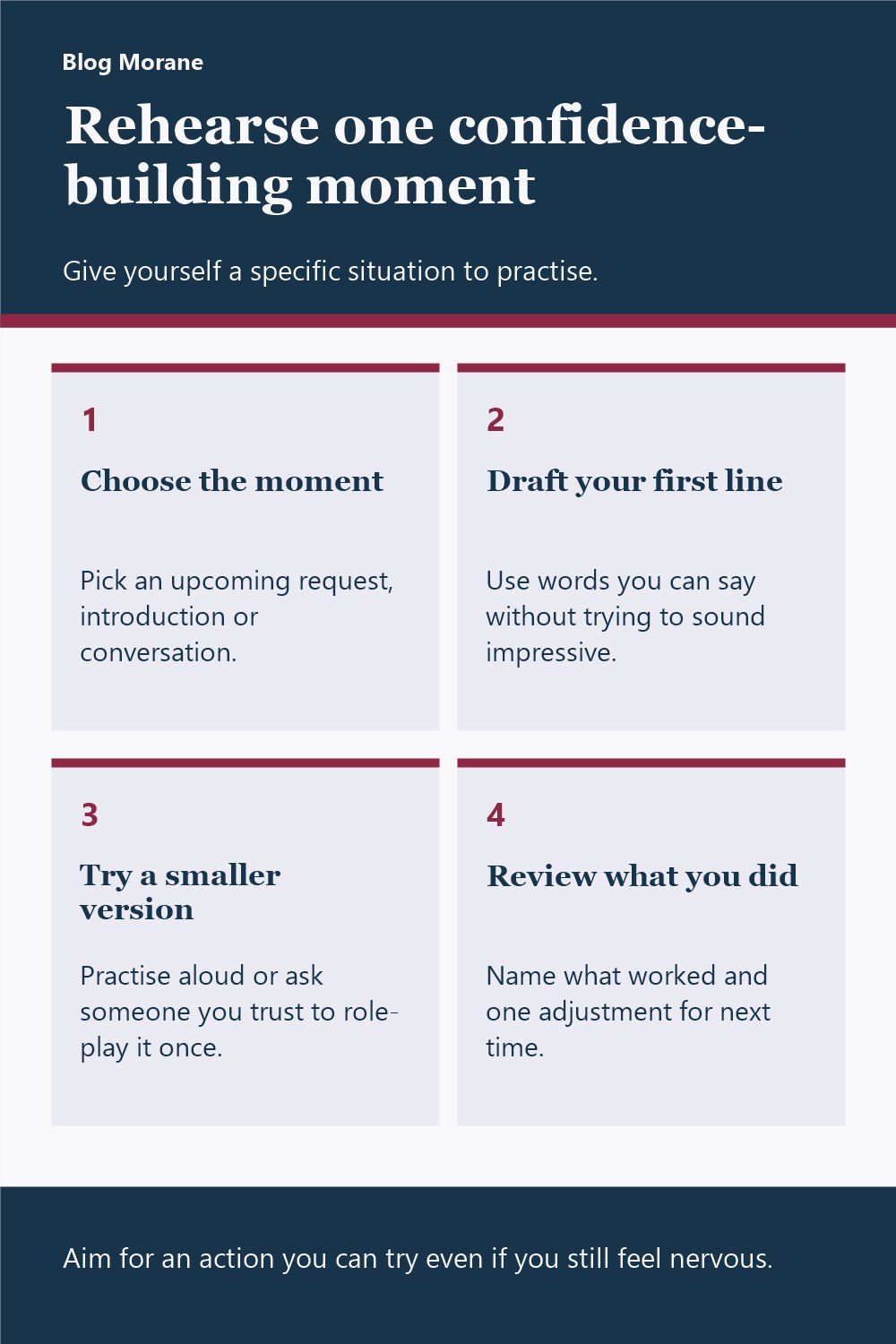
Try imagining a specific situation before attempting it and recognizing your efforts along the way. Rehearse the words you want to use, such as an introduction or a question, then choose one manageable real-world attempt. Review what you learned rather than requiring yourself to feel confident before you begin.
Read the infographic in text
Rehearse one confidence-building moment Give yourself a specific situation to practise.
- Choose the moment Pick an upcoming request, introduction or conversation.
- Draft your first line Use words you can say without trying to sound impressive.
- Try a smaller version Practise aloud or ask someone you trust to role-play it once.
- Review what you did Name what worked and one adjustment for next time.
Aim for an action you can try even if you still feel nervous.