

After heartbreak, advice about becoming stronger can feel like another demand. You may want a little rest, someone to listen or help getting through ordinary tasks. You do not have to find a lesson in what happened before receiving care.
Healing can be a useful word for gradually making room for life after a painful experience. It does not promise a deadline, require forgiveness or mean that you will forget. Begin with the support and choices available to you now.
On this page

Make the next day more manageable
Choose a small practical priority before adding a new routine. You might need food in the house, a clearer plan for a shared responsibility or an evening without unnecessary messages. Ask what would reduce a demand, rather than what would make you look as though you are coping well.
A simple plan could contain three items: something essential, something that offers a pause and someone you can contact. For example, attend an appointment, listen to familiar music afterwards and ask a friend for a short call.
You can revise the plan when your energy or circumstances change. Rest is not a reward you must earn by being productive first.
Ask for specific support
“I need help” is a valid request, but a more specific invitation can make it easier for someone to respond. You might say:
- “Could you sit with me for a while? I do not need advice tonight.”
- “Would you help me plan meals for the next couple of days?”
- “Can we talk about something other than the breakup?”
- “Could you check in with me after that difficult meeting?”
A person may care and still be unavailable. Consider more than one source of support rather than treating a single response as a test of whether anyone values you. You can also look for professional or community help when friends cannot meet a need.
Leave room for mixed feelings
You might miss someone and feel relieved that the relationship has ended. You might enjoy a meal or a joke and feel sad later. These experiences can coexist; you do not have to select one feeling as the correct account of your life.
The NHS information on grief and loss explains that a relationship ending can bring grief and that feelings do not necessarily follow a neat order. Support is available when coping becomes difficult.
Notice what you want in a particular moment. Some feelings may need a conversation; others may be easier to sit with while doing something ordinary.
Keep care separate from reconciliation
Caring for yourself does not depend on the other person explaining, apologising or returning. You can make a contact plan, ask for practical assistance and protect your privacy while leaving those questions unresolved.
You can also keep a boundary after accepting an apology. Forgiving, if you choose it, does not oblige you to resume a relationship. Where there has been intimidation or harm, consider support focused on your safety rather than pressure to have one more conversation.
Reflect only when it helps
When you feel ready, ask about something you can use: a need you want to express earlier, a boundary you want to keep or a quality you value in friendship. Avoid turning reflection into a search for how you caused someone else’s harmful actions.
You do not have to become grateful for a painful event. If prayer, spiritual reflection or a reading is meaningful to you, leave room for your own judgement and practical support. No interpretation needs to become an instruction to endure mistreatment.
Review what you need next
Check whether your current support is enough. Are you managing essential tasks? Do you have someone safe to talk to? Would an appointment or more practical help reduce the strain?
If distress is worsening or making daily life difficult, speak with a qualified professional about suitable support. If you may be in immediate danger, seek urgent local help.
For today, it is enough to identify a need and a possible next step. Your experience does not have to become an inspiring story to deserve attention and care.
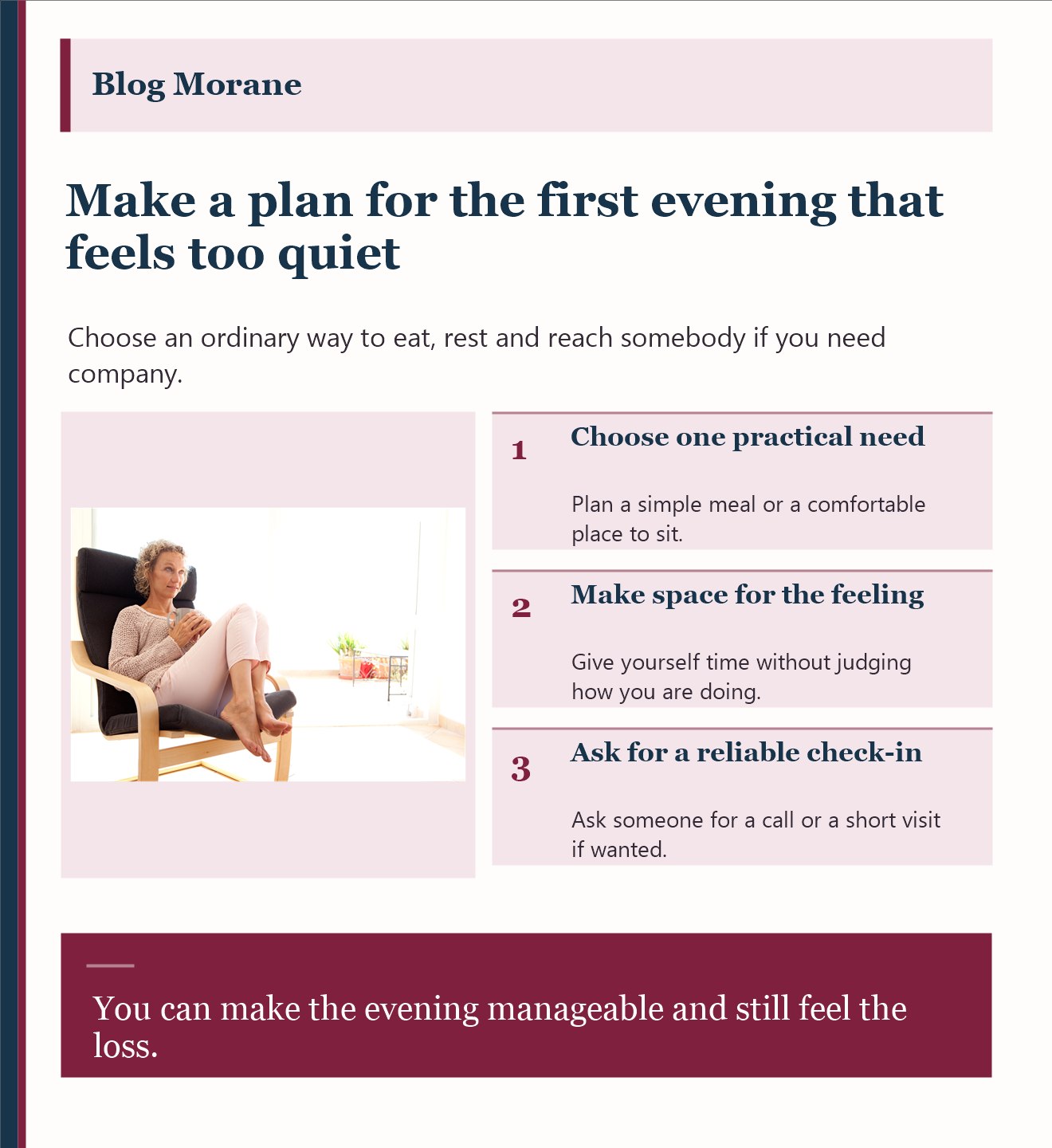
Make a plan for the first evening that feels too quiet
If your first evening in a different home leaves you restless, choose a simple meal, get one comfortable part of the room ready and ask a trusted person if you can talk at a specific time. Let the rest of the setup wait if it can.
Different evenings may need different plans. If sleep, eating or daily tasks remain hard, consider qualified support along with the people you can reach.
Read the infographic in text
Make a plan for the first evening that feels too quiet
Choose an ordinary way to eat, rest and reach somebody if you need company.
- Choose one practical need Plan a simple meal or a comfortable place to sit.
- Make space for the feeling Give yourself time without judging how you are doing.
- Ask for a reliable check-in Ask someone for a call or a short visit if wanted.
You can make the evening manageable and still feel the loss.