
Romantic feelings for a best friend can bring excitement and uncertainty. You already know something about each other, but you may not know whether they want a different kind of relationship. Familiarity, affection or a flirty moment cannot answer that question on their own.
You can take time to understand what you want and decide whether to talk about it. Neither a conversation nor silence guarantees that the friendship will stay the same, so aim for honesty and respect rather than a perfect outcome.

Understand what you are hoping for
Ask what has changed. Do you want to date this person, feel especially close during a difficult time or worry about losing the friendship? More than one feeling can be present.
You do not have to decide immediately. Give yourself room to notice the feelings without treating them as instructions to act. Talking privately with someone outside the friendship may help you think clearly without involving mutual friends as messengers.
Respect existing commitments and boundaries
If either of you is in a relationship, consider the agreements involved. Do not encourage secrecy, ask them to prove their feelings or make your friendship depend on them leaving someone else.
You can choose some space while you decide how to handle your own relationship and feelings. That decision is yours to make without turning your friend into a promised alternative.
Avoid treating signals as proof
A hug, frequent message or shared joke can mean different things to different people. Comparing every gesture with their usual behaviour may create more uncertainty.
Do not test interest by escalating touch or kissing without consent. You can ask about a date directly if you decide to raise the subject. They should have a genuine opportunity to decline.
Choose a calm conversation if you want one
Pick a setting where neither person feels trapped or put on the spot. Avoid raising it when someone is intoxicated or relying on you for a ride home. Ask whether it is a reasonable time to talk.
You might say, “I have noticed that my feelings have become romantic. Would you be interested in going on a date? It is okay if you do not feel the same.” Speak for yourself and leave space for their answer, including uncertainty.
Accept the answer without persuasion
If they say no, acknowledge it and stop pursuing a romantic response. Friendship, gifts or past support do not create a debt. Do not treat reluctance as an invitation to keep trying.
If they are interested, discuss what a first date would mean to each of you. You can move slowly and revisit the conversation. The love is respect guide to boundaries offers useful prompts for talking about comfort and personal limits.
Give both people room to decide what follows
You may need less contact for a while, or one of you may prefer a different kind of friendship. Be clear about a break without using distance as a punishment or bargaining tool.
There is no guaranteed timetable for things to feel familiar again. Seek support elsewhere, keep other parts of life available and respect each person’s freedom to decide what contact works for them.
Decide what to ask a friend and how to handle either answer
If a friend has been spending more time with you, ask yourself whether you want a date or simply want to keep enjoying the friendship. If you want a date, say so briefly and make it clear they can decline without having to explain.
If they prefer friendship and you need less contact, say what change would help. Consider independent plans that give you time to process without involving mutual friends in the decision.
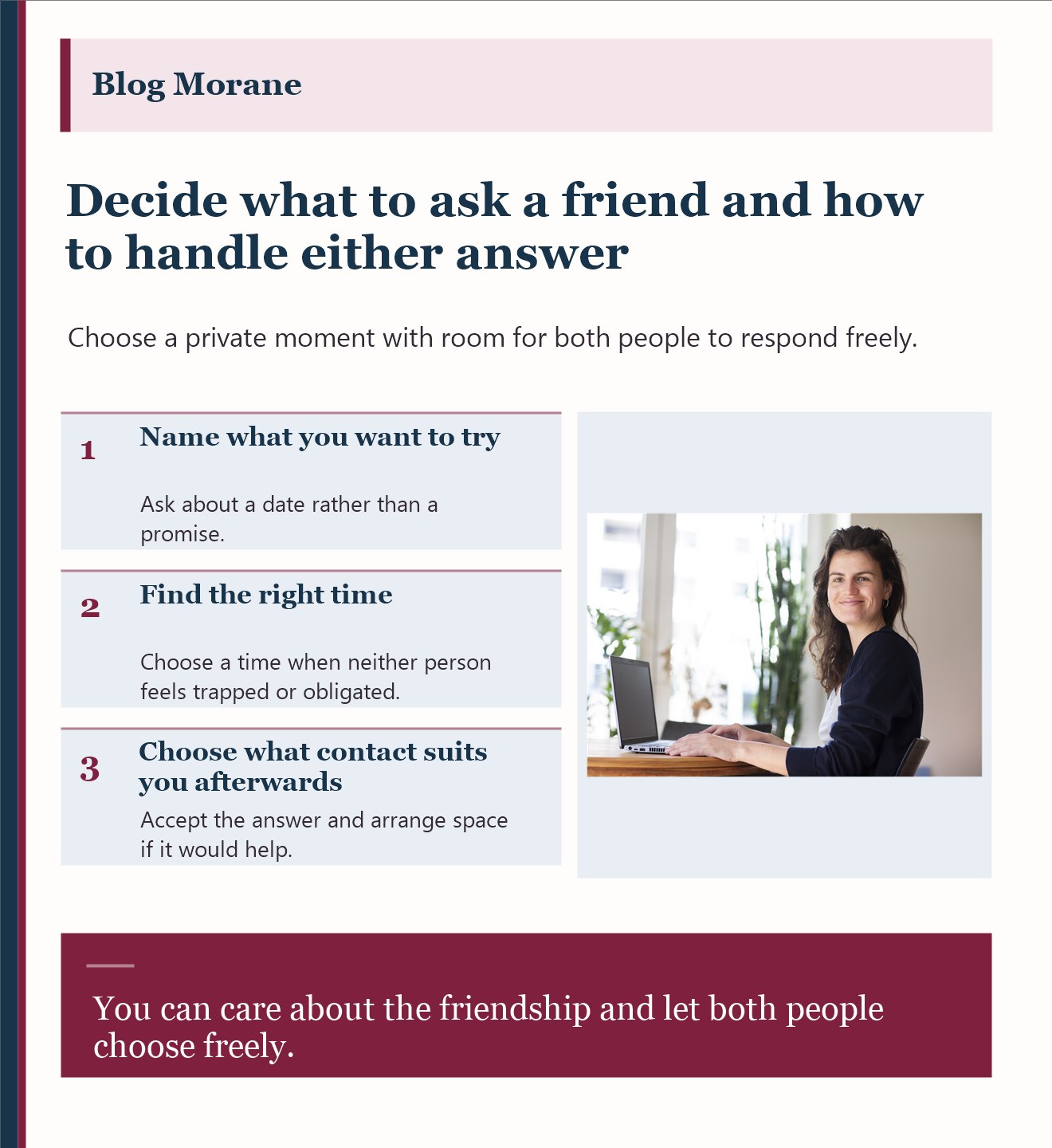
Read the infographic in text
Decide what to ask a friend and how to handle either answer
Choose a private moment with room for both people to respond freely.
- Name what you want to try Ask about a date rather than a promise.
- Find the right time Choose a time when neither person feels trapped or obligated.
- Choose what contact suits you afterwards Accept the answer and arrange space if it would help.
You can care about the friendship and let both people choose freely.