

Non-exclusive dating can mean different things to different people. One person may mean having early dates with several people; another may mean an ongoing arrangement in which partners agree they can have other relationships. Neither meaning should be assumed. What matters is whether everyone affected has the information and freedom they need to make their own choices.
You may want exclusivity, prefer a different arrangement or still be deciding. A useful conversation makes those differences clearer without pressuring anyone to accept terms they do not want. Dating more than one person is not automatically dishonest, and calling an arrangement non-exclusive does not excuse misleading someone.
On this page
Say what non-exclusive means to you
Be specific about what you are proposing. Are you continuing to meet new people, having other sexual partners or asking for an ongoing relationship with agreed boundaries? A vague label may leave both of you with different expectations.
You could say, “I am enjoying getting to know you, and I am still going on dates with other people. What are you looking for?” If you want an exclusive relationship, say that too. You do not have to pretend to be comfortable with a different arrangement to keep someone interested.
Make agreements without pressure
Give the other person time to consider what works for them. Agreeing because of fear, repeated pressure or a threat to withdraw affection is not a comfortable basis for a relationship. Either person can say, “That is not the kind of dating I want.”
Love is respect’s healthy-relationship guidance emphasises communication, boundaries, mutual respect and support. Those principles matter across different relationship arrangements. For more on intentions and follow-through, read Dating Honesty: Clear Agreements and Consistent Behaviour.

Discuss practical boundaries and privacy
Protect other people’s privacy while being honest about circumstances that affect a partner’s choices. Avoid sharing private messages, identifying details or intimate information about someone else to create jealousy or prove you are desirable.
Also discuss ordinary logistics: how often you want to meet, what communication you can manage and whether plans need advance notice. Keep commitments you make, and tell someone promptly if a plan changes.
Include sexual health and consent
If intimacy is part of the connection, talk before it happens about consent, barriers, contraception where relevant, STI testing and how changes in partners will be communicated. An agreement about dating does not create consent to a sexual activity. Either person can decide not to continue.
Do not infer someone’s STI status from their appearance, symptoms or relationship label. The CDC’s STI testing guidance notes that infections can have no symptoms and recommends discussing your circumstances with a healthcare provider to decide which tests you need. A qualified clinician can help you understand options relevant to you.
Notice how the arrangement feels
Check in with your own experience. Are you comfortable saying what you need? Are agreed boundaries respected? Do you have enough time and energy for the commitments you are making? Feeling jealous, uncertain or overwhelmed is a reason to explore what would help, rather than a feeling you have to hide.
You can ask for a change, take a pause or end the connection. The other person may not want the same change, and you cannot require them to become exclusive. You can decide whether continuing under the current terms suits you.
Revisit or end the agreement clearly
Preferences can change as you get to know someone. Bring that up before acting in a way that conflicts with an existing agreement. If you both decide to become exclusive, discuss what that means and how each of you will handle any other connections.
If your aims differ, a clear ending can be kinder than repeatedly promising a future you do not want. You might say, “I am looking for exclusivity, and I understand that you are not. I am going to step back.” You do not need to prove that either preference is wrong to recognise a mismatch.
A workable arrangement depends on honest choices and consistent respect. It does not have to follow a particular timeline, and you are free to choose a different way of dating.
Discuss what a non-exclusive arrangement would mean next week
If both people agree they can date others, discuss whether they want to be told before another date or only when an agreement changes. Health questions and permission to share private details can be separate conversations.
Put one practical point in your own words and ask the other person if they understood it the same way. If a disagreement remains, decide what you are comfortable doing while you talk it through.
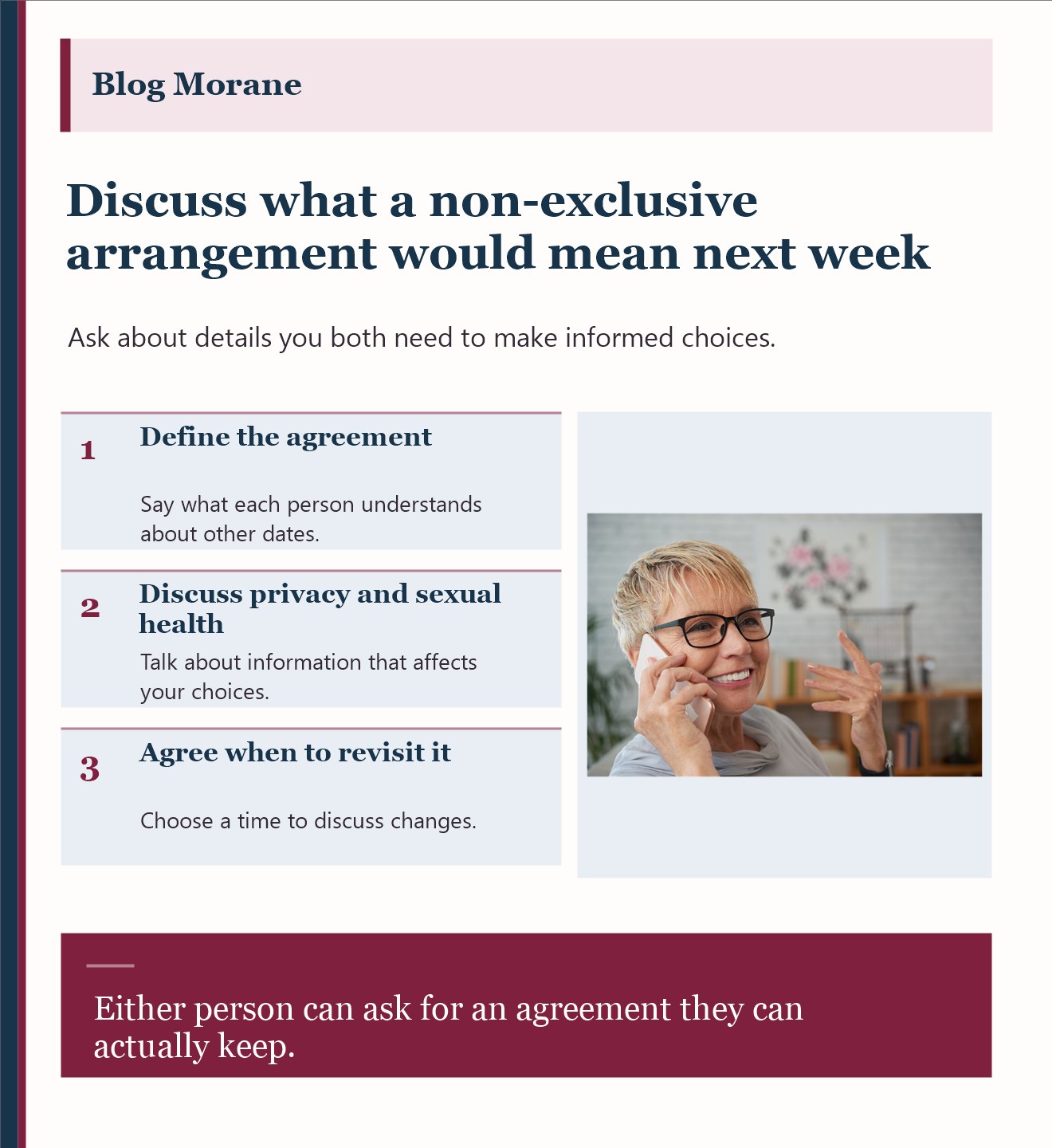
Read the infographic in text
Discuss what a non-exclusive arrangement would mean next week
Ask about details you both need to make informed choices.
- Define the agreement Say what each person understands about other dates.
- Discuss privacy and sexual health Talk about information that affects your choices.
- Agree when to revisit it Choose a time to discuss changes.
Either person can ask for an agreement they can actually keep.