

A breakup can change your routines, living arrangements and sense of the future. You might miss someone and still know the relationship needed to end. You might feel relief alongside sadness, or want answers that the other person cannot give.
Moving forward does not require you to stop caring, forgive on demand or start dating again. Begin with what makes the next few days more manageable: suitable contact limits, practical help and ordinary care.
In this article
Make room for your feelings
Name what is difficult today rather than deciding how you should feel about the whole breakup. You may be grieving companionship, familiar habits, shared plans or the person themselves. Those losses can matter even when separation was your choice.
You do not have to rush past it
A quiet break, a private note or a conversation may give you somewhere to put your thoughts. Choose what helps without requiring it to erase the feeling. If writing becomes another round of self-criticism, stop and return to something more grounding.
Reflect without assigning all the blame
Look at specific behaviour and circumstances. What did each person want, communicate and choose? Gender does not tell you what someone needed. You can recognise a mistake of your own without accepting responsibility for another person’s decisions or mistreatment.
Good memories can coexist with a boundary
You do not need to turn your ex into a villain to justify distance. Remembering a good day does not cancel the problems that led to the ending. Keep both parts of the story in view.

Get support for ordinary days
Ask for something concrete: company for a meal, help collecting belongings or a short check-in after work. Tell someone whether you want listening, practical help or distraction. They do not need to investigate your ex or persuade you to reunite.
Return to familiar interests gently
Choose an activity that fits your energy and budget. Read a few pages, prepare an easy meal or spend time somewhere comfortable. Looking after yourself does not depend on a new appearance, a major achievement or a public display of happiness.
Let connection be ordinary
A brief message to a friend or a familiar group activity may be enough. You can ask people to stop passing on updates about your ex. There is no requirement to meet a new partner to prove that life is continuing.
The ending is not a verdict on your worth
Try describing the event precisely: a relationship ended, and you are adjusting. That leaves room to learn without turning the experience into a judgement about whether you deserve care.
Choose contact limits that fit
If checking messages or social accounts keeps reopening the same question, consider muting updates or taking a pause. If you share parenting, housing, work or other responsibilities, total separation may be impractical. A single channel and clearly limited topics can make necessary communication easier to organise.
For example: “Please use email about collecting your belongings. I am not ready to discuss the relationship.” Adapt the wording to your situation. If contact involves threats, coercion or abuse, seek specialist support rather than arranging a private closure meeting.
Closure may not come from another conversation
Write down what you know and what remains uncertain. Consider whether an unanswered question changes your next practical decision. You can decide what contact you will accept even when the explanation feels incomplete.
Reconciliation needs mutual choice
Wanting someone back does not establish that restarting would work. Consider what has actually changed and whether both people freely want another attempt. Respect a refusal or request for distance; repeated persuasion is not a repair plan.
Missing someone does not require action
You can feel affection, anger or longing without sending a message immediately. Leave yourself time to decide whether contact serves a clear purpose and respects both people’s boundaries.
Take pressure off forgiveness
Forgiveness is a personal choice, not an admission test for recovery. You do not owe renewed trust, access or friendship. You can work towards a steadier life while still feeling hurt about what happened.
Separate responsibility from punishment
If you caused harm, identify a suitable repair and a change you can sustain. An apology should not demand reassurance or a reply. Taking responsibility also means accepting that the other person may want no further contact.
Acknowledge the future you imagined
Losing shared plans can hurt. You do not have to dismiss those hopes as foolish. Notice which wishes still matter to you, while allowing the details of your future to remain undecided.
Build a future in small pieces
Choose one manageable task for this week, such as arranging a practical appointment or reconnecting with a friend. You do not need a complete new life plan or a promise that another relationship will arrive.
Let your pace be individual
There is no deadline that proves you have moved on. If distress is making daily life hard to manage, consider appropriate professional support. The NHS guidance on relationships and wellbeing also discusses boundaries, trusted support and leaving unhealthy relationships.
Make the next step workable
Ask what would help today: food, rest, a task shared with someone else or a limit around contact. A difficult afternoon does not erase an earlier decision. You can adjust your plan without treating yourself as a failure.
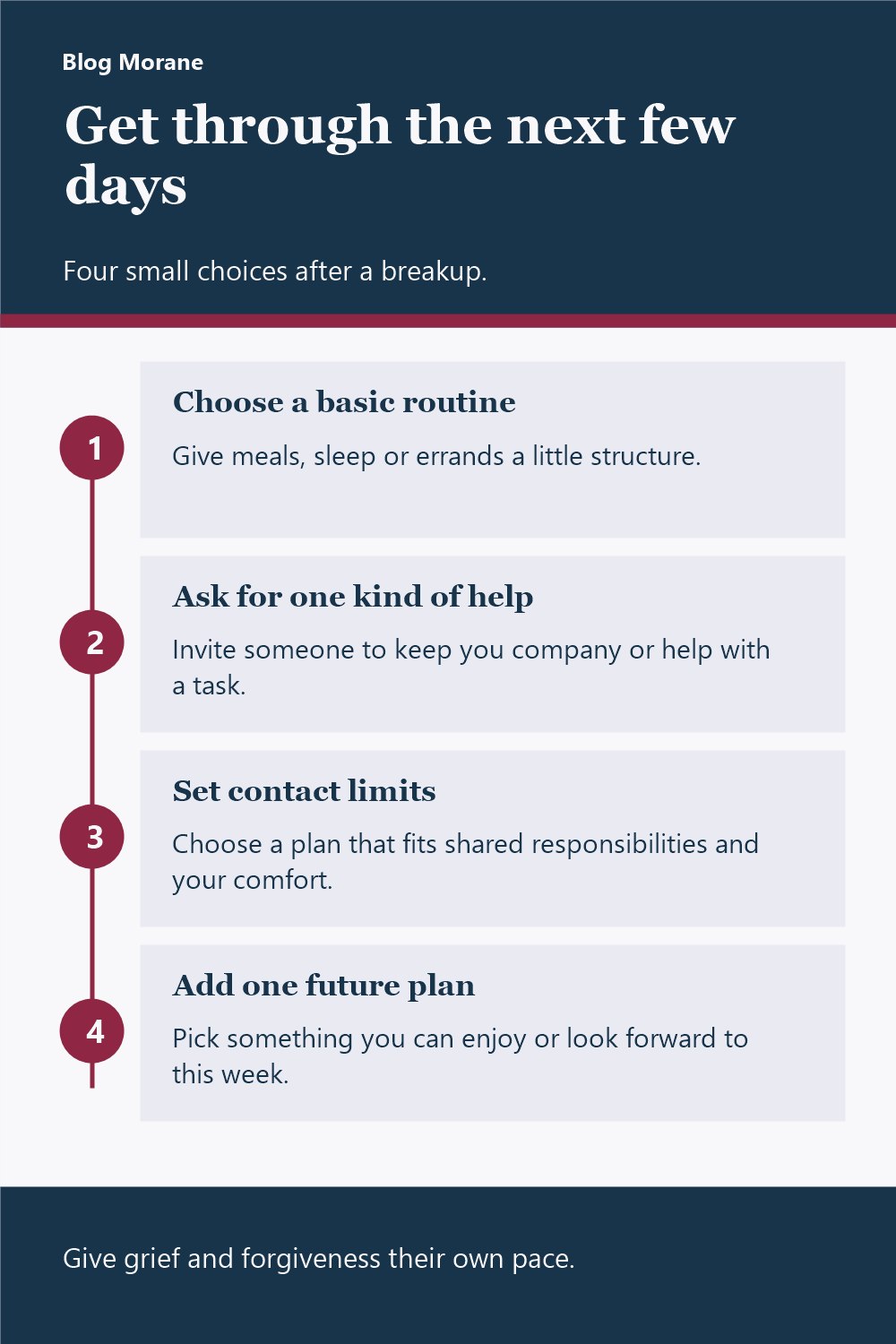
Read the infographic in text
Get through the next few days Four small choices after a breakup.
- Choose a basic routine Give meals, sleep or errands a little structure.
- Ask for one kind of help Invite someone to keep you company or help with a task.
- Set contact limits Choose a plan that fits shared responsibilities and your comfort.
- Add one future plan Pick something you can enjoy or look forward to this week.
Give grief and forgiveness their own pace.