

Dating after a divorce can bring curiosity, hope, grief and uncertainty, sometimes on the same day. You can want companionship while still adjusting to a changed home, routine or sense of the future. There is no single timetable that determines when everyone should date again.
Start with what would make dating manageable for you now. A short conversation, one low-pressure meeting or a decision to take a break can all be reasonable choices. You do not have to prove that you have moved on.
In this article

1. Choose a pace you can sustain
Readiness does not require feeling cheerful or certain all the time. Ask whether you want to meet someone, have enough room for the experience and feel able to say no. If an invitation feels like another demand, you can postpone it.
Try a small limit rather than an ambitious plan: one dating-app session on a chosen evening, or a daytime coffee with an end time. You might say, “I would enjoy meeting you. I have about an hour on Saturday.” Change the plan if it leaves you exhausted or distracted from more pressing needs.
2. Name what you want to make room for
Separate what you would enjoy from what you need to feel respected. Shared interests may be appealing; being able to decline intimacy or keep time with friends may be essential. Write down a few priorities in your own words.
- What kind of connection interests you: occasional dates, companionship or a committed relationship?
- How much time and money can you comfortably spend?
- What would you prefer to keep private while getting to know someone?
You can revise your answers. Explain relevant limits without apologising for having them: “I am interested in dating, but I am not ready to discuss living together.” For more examples, love is respect explains emotional, physical and digital boundaries.
3. Notice behaviour over time
Attraction can be enjoyable without answering every question about compatibility. Pay attention to ordinary interactions: do plans feel mutual, can you disagree, and does the other person accept a change of mind? A flattering message or an intense first date gives you only part of the picture.
Ask direct questions instead of testing someone or trying to decode every pause. “Are you looking for something casual or a relationship?” can start a useful conversation. Revisit expectations as things develop; a few dates do not establish exclusivity without an agreement.
For a closer look at trust, read Dating Honesty: Clear Agreements and Consistent Behaviour.
4. Keep practical choices in your hands
For an early meeting, choose somewhere public, arrange your own way home and let someone you trust know the plan. Share personal information gradually. You can leave a date because you are uncomfortable, even if you cannot give a detailed explanation.
Keep control of your accounts and passwords. The FTC’s romance-scam guidance warns against sending money or gifts to an online romantic interest you have not met in person, including requests presented as emergencies.
Pressure, threats or fear of a person’s reaction deserve attention. Another person remains responsible for their harmful behaviour. If declining or leaving could put you at risk, seek support from a domestic-abuse service to consider safer options.
5. Make room for the rest of your life
Keep some routines, friendships and activities that matter to you. A promising date does not require giving up every free evening or sharing every detail of the separation. If you have children, keep their privacy and daily needs in view while you consider how a new relationship might fit.
Practical arrangements can remain separate from romantic decisions. When separation issues need attention, Separation and Divorce: Planning Your Next Steps offers a place to organise questions and support.
6. Review a date without blaming yourself
After a date, ask: Did I feel listened to? Was I able to be myself? Would I like another meeting? You do not need to decide whether this person could be your lifelong partner.
A disappointing experience can tell you about a mismatch, an unmet need or a limit you want to express next time. It does not establish that you are unlovable or that divorce has damaged your chance of connection. You may continue, change your approach or pause. Let the next step reflect what you want and can manage now.
Choose what to share about your divorce on an early date
If you need to be home at a certain time for family care, explain your availability without describing the entire divorce. If the other person asks for details you would rather keep private, say what you are comfortable discussing and move back to the plan.
You can decide what sharing would help the relationship as you get to know someone. Notice whether the other person respects a limit and gives you room to choose how quickly to go.
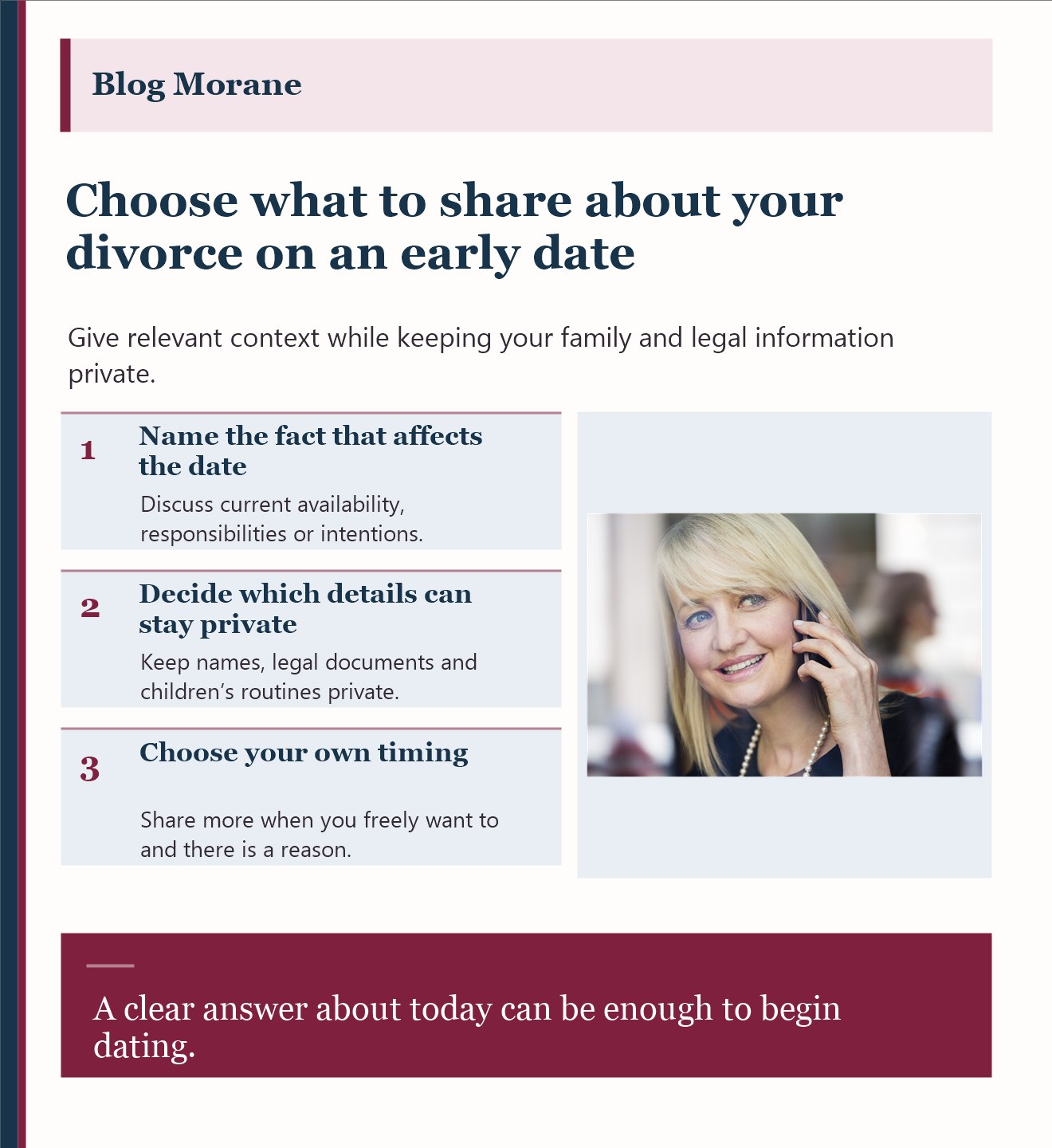
Read the infographic in text
Choose what to share about your divorce on an early date
Give relevant context while keeping your family and legal information private.
- Name the fact that affects the date Discuss current availability, responsibilities or intentions.
- Decide which details can stay private Keep names, legal documents and children’s routines private.
- Choose your own timing Share more when you freely want to and there is a reason.
A clear answer about today can be enough to begin dating.