

Seeing someone else begin a relationship can bring up a painful question: “Why not me?” You might feel disappointed, left behind or tempted to compare every detail of your life with theirs. Those feelings deserve care. They do not establish that you are less lovable, that the other person is better or that you have missed your only chance.
Dating involves another person’s preferences, circumstances and freedom to choose, alongside your own. You can learn from an experience without treating it as a competition you should have won. Start by separating what happened from the story you are telling yourself about it.
On this page
Name the disappointment before solving it
Try a specific description: “I hoped we would keep seeing each other, and I am sad that we will not.” That gives you something real to respond to. “Nobody will ever choose me” turns one experience into a prediction you cannot know.
You do not have to feel grateful for rejection or immediately find a lesson in it. Take a walk, talk with someone you trust or give yourself a quieter evening. A short break from dating can be a reasonable choice.

Separate facts from comparison
You may know that someone declined another date. You usually do not know everything about their reasons or the relationship they chose. A social-media announcement is a small part of a life, not a complete measure of its quality.
Consider muting updates or setting a limit on checking an ex’s profile if it keeps restarting the comparison. Choose that boundary for your own attention, rather than as a way to provoke a response.
Respect a clear answer and mutual choice
If someone says no, accept the answer. You do not need a persuasive message, a makeover or a better performance to change their mind. A simple “Thanks for being clear; take care” is enough if you want to reply.
When a situation is unclear, one direct question can help: “Would you like to meet again?” If they decline or repeatedly avoid making a plan, you can stop pursuing it. Respect also means allowing yourself to decline a connection that does not suit you.
Review what you can change without self-blame
Later, ask whether there is a practical adjustment you want to make. You might state your relationship intentions earlier, choose a more comfortable meeting place or pay attention to whether effort is shared. These choices can make dating clearer; they cannot guarantee that a particular person will want a relationship.
If you behaved in a way you regret, name that behaviour and choose how to handle it differently. You can take responsibility for interrupting or making an assumption without deciding your whole personality is the problem. For the role of clear agreements, read Dating Honesty: Clear Agreements and Consistent Behaviour.
Keep your own timeline and needs
A friend’s engagement, a birthday or a family question can make dating feel urgent. Your wish for partnership may be strong, but urgency does not require accepting disrespect or pretending you want a different life.
Think about what matters to you: companionship, children, commitment, independence or something else. Where a decision has a real time limit, seek relevant qualified advice and consider your options directly. Comparing yourself with another couple will not supply the information you need.
Choose a grounded next step
Choose one action that supports you whether or not it leads to a date: keep an existing friendship, return to an activity you enjoy, update an honest profile or take a planned break. Notice qualities you value in yourself beyond romantic attention.
The NHS guide to raising low self-esteem suggests identifying harsh beliefs and looking for evidence that challenges them. If self-criticism is persistent or is affecting daily life, a qualified mental-health professional can help you work through it.
You can want a relationship and still build a meaningful life now. See Positive Thinking While Dating: Hope and Practical Choices for connecting hopeful intentions with choices you can actually make.
Give a dating rejection a fair and specific description
If a date ends and you notice them seeing someone else, your first thought might be that the other person has something you lack. Describe what you actually know. They made a different choice, and you can still decide what you’re looking for.
Give yourself a practical kind of company if you want it. You might ask a friend to go somewhere you enjoy and leave the search for an explanation until you feel ready.
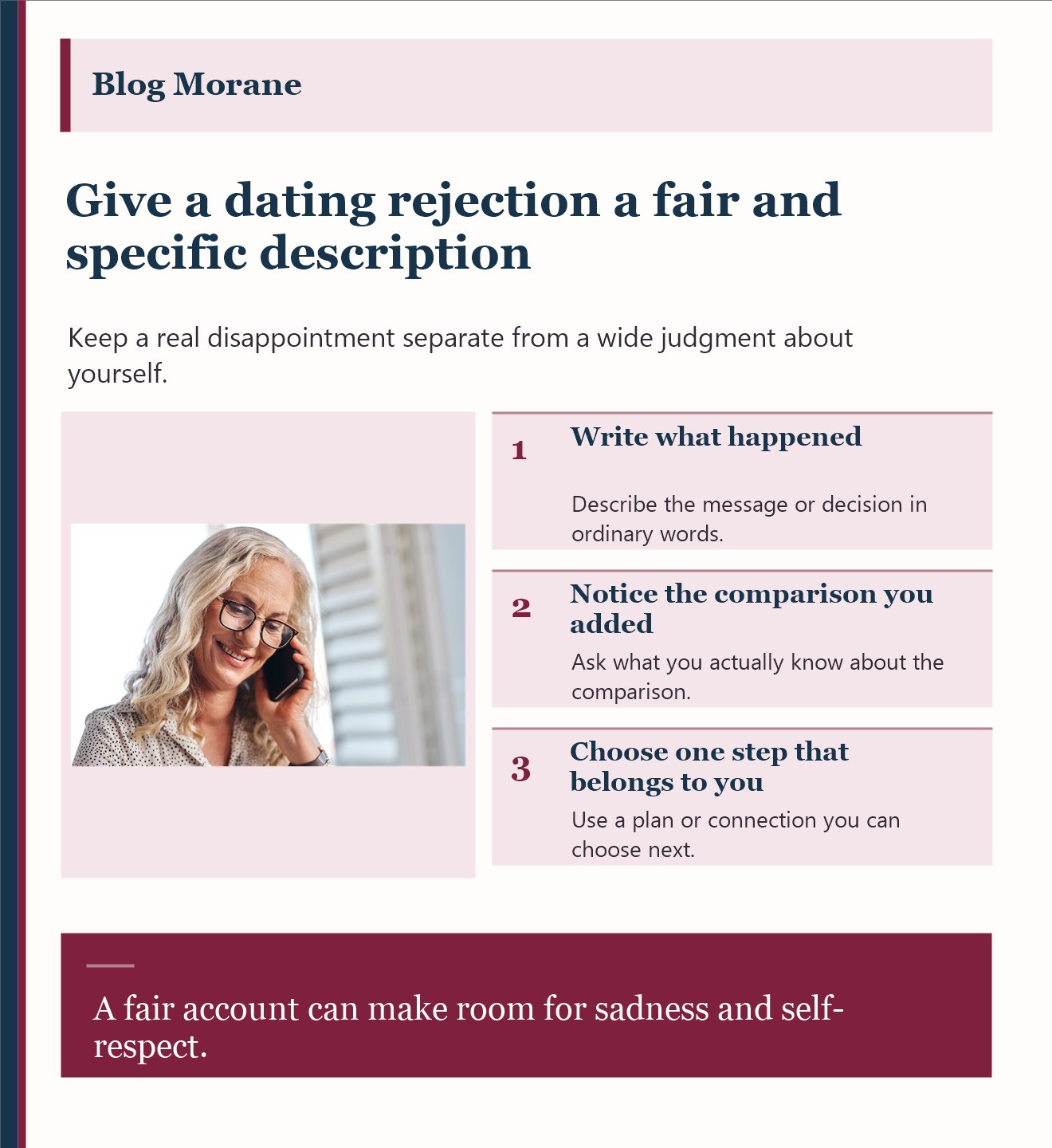
Read the infographic in text
Give a dating rejection a fair and specific description
Keep a real disappointment separate from a wide judgment about yourself.
- Write what happened Describe the message or decision in ordinary words.
- Notice the comparison you added Ask what you actually know about the comparison.
- Choose one step that belongs to you Use a plan or connection you can choose next.
A fair account can make room for sadness and self-respect.