

Personal change becomes more workable when it connects something you value with an action you can actually take. You can practise new habits while keeping respect for who you are now.
Begin with one behaviour you would like to try, the circumstances that could get in the way and one source of support. You can adjust the plan as you learn, instead of judging yourself by a perfect streak.
Choose a direction that matters to you
Wanting to change your life does not mean your current self is a failure. You might want more connection, a different routine or a way to make room for something you miss. Start with one part of life rather than a demand to become an entirely new person.
Ask what the change would make possible. “Be more impressive” is difficult to act on; “make time for a friendship I value” gives you a direction. Check whether the goal is yours or something you feel pressured to want. Your choices can reflect your values without satisfying everyone.

Notice what makes the habit easier or harder
Describe the current pattern without turning it into a character judgement. Instead of “I am unreliable,” try “I postpone replying when I am tired, then feel awkward about the delay.” That gives you something specific to work with.
Look at time, money, access, health and responsibilities as well as motivation. A routine that worked before a change in your circumstances may need redesigning. You may need a practical resource or another person’s help.
Make one small action easy to start
Choose an action small enough for an ordinary day. For example, send one short message after lunch, put walking shoes by the door or spend five minutes finding a course that interests you. Decide when and where you will try it.
This is an experiment, so the smallest version still counts. If you miss it, choose the next available opportunity rather than treating the whole plan as ruined.
Ask for feedback you can use
A trusted person may notice something you have missed. Ask a focused question: “Was my request clear?” or “What would make this plan more realistic?” Useful feedback describes behaviour and options; it does not require insults, humiliation or surrendering your choices.
You can listen without agreeing with every suggestion. Take time to decide what fits, especially when feedback comes from someone who benefits from you remaining in an uncomfortable role.
Review progress and adjust the plan
After a few attempts, ask what happened. Did the action fit your schedule? Did it move you toward the life you want? Would a smaller action, different cue or shared task help? Notice evidence of progress without demanding a perfect streak.
Some changes involve difficult circumstances that personal habits cannot resolve alone. The NHS suggestions for managing stress include connection, time for yourself and focusing on what you can influence. Consider which of these is available and useful to you.
Allow room for rest and a new direction
Changing a goal can be a considered decision. You might discover that you want a quieter routine, more support or a different kind of relationship with work. Rest does not have to be earned through constant improvement.
Choose one next step you can explain in a sentence. Then give yourself enough room to learn from it. If persistent distress is making everyday life difficult, a qualified professional can help you explore the barriers and support you need.
Attach a new habit to something you already do
If connection matters to you and you keep forgetting to reply to friends, choose an ordinary reminder. After lunch on Tuesday, send one brief message or choose a time to call. Keep the expectation low enough that you can try it again next week.
If the cue doesn’t fit, move the action to another moment or choose a smaller version. Assess the plan by what it adds to your day, along with whether you can repeat it.
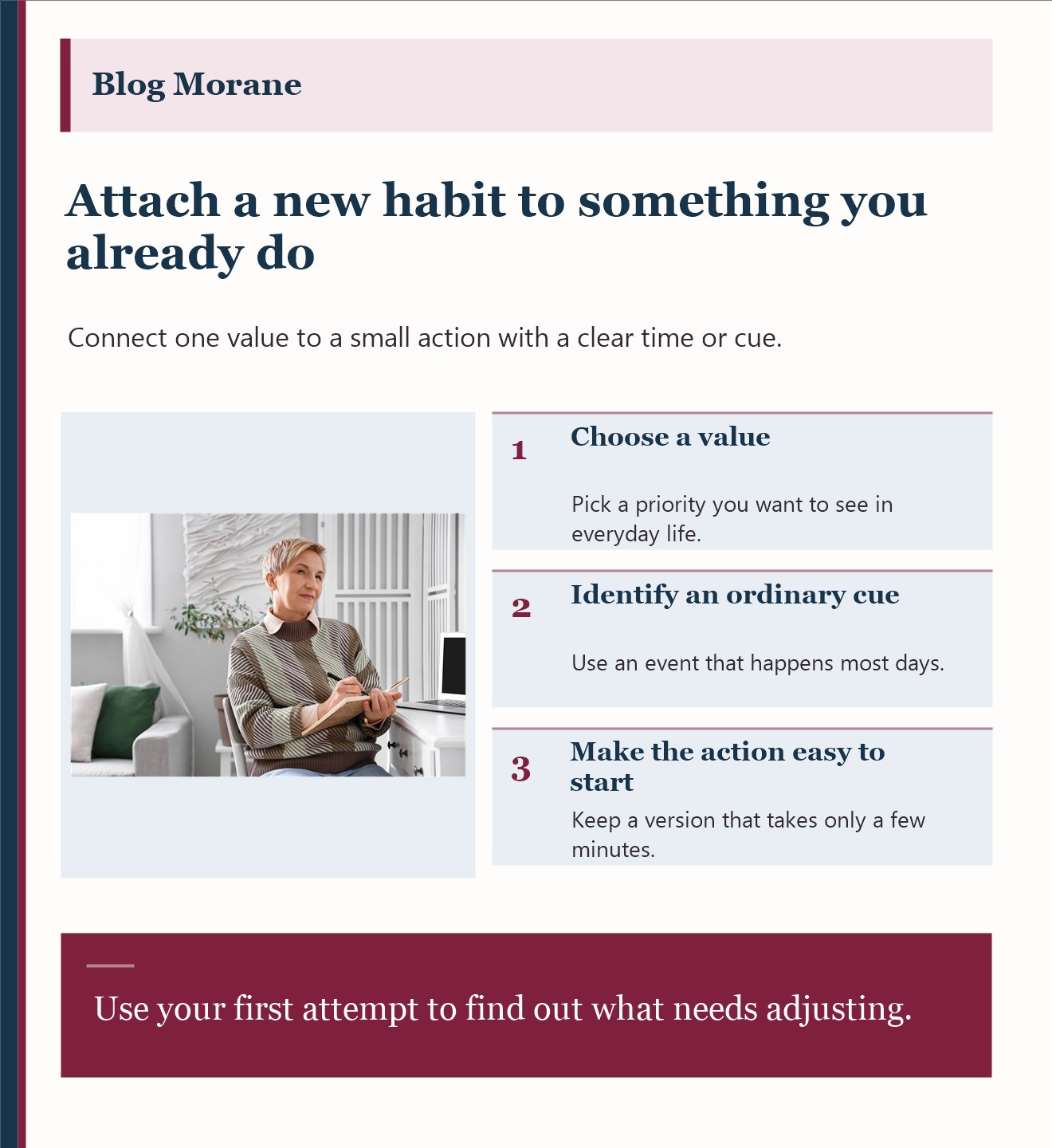
Read the infographic in text
Attach a new habit to something you already do
Connect one value to a small action with a clear time or cue.
- Choose a value Pick a priority you want to see in everyday life.
- Identify an ordinary cue Use an event that happens most days.
- Make the action easy to start Keep a version that takes only a few minutes.
Use your first attempt to find out what needs adjusting.