

If everyday decisions feel like tests you cannot afford to fail, “lighten up” may be the last thing you need to hear. A more useful starting point is to notice where the pressure comes from and what might make the day more manageable.
Some situations deserve serious attention. Making room for enjoyment can sit alongside responsibility, grief or genuine uncertainty.
Notice when the pressure rises
Think about one recent moment when a small choice became exhausting. Were you afraid of disappointing someone, making a mistake or being judged? Did tiredness, a deadline or a past experience add to the pressure?
A specific observation is more useful than labelling yourself “too serious.” You may be responding to demanding circumstances, and you do not owe anyone a cheerful performance.
Separate a problem from a prediction
Ask whether there is a practical action to take now. A missed payment deadline needs attention; imagining that one awkward conversation has ruined every friendship is a prediction you cannot verify by replaying it.
For an actionable problem, choose the next step and a time to take it. For a repeated worry, writing it down may help you return to the present. The NHS guide to tackling worries explains ways to distinguish practical problems from hypothetical worries and set aside a short time to consider them.
Decide what is enough for this task
Different tasks need different levels of care. Before starting, define what completing this one reasonably requires. A friendly message may need a clear sentence; it does not need the perfect phrase.
Try a modest limit, such as one review before sending a routine email. Use proper checks where mistakes have meaningful consequences, and seek help if the responsibility exceeds your resources.
Make space for enjoyment that suits you
Choose something accessible rather than another demanding project: a favourite song, a few minutes outdoors, a familiar comedy or a conversation with someone you like. Quiet enjoyment counts. You do not have to become outgoing or find every situation funny.
Humour can bring relief when everyone involved welcomes it. Avoid using it to dismiss pain, excuse hurtful behaviour or pressure someone to accept a joke at their expense.
Reduce the feeling of being watched
You can keep a hobby private, leave a task unposted or spend time with people who do not expect you to perform. When you catch yourself rehearsing how you will appear, ask what you would choose if the moment did not need an audience.
Consider a simple boundary around an exhausting demand: “I can help for half an hour,” or “I will reply tomorrow.” You can be considerate while leaving room for your own needs.
Notice when you need more support
One pleasant activity will not solve every source of stress. If worry, low mood or fear keeps disrupting sleep, relationships or everyday tasks, consider talking with a qualified professional. You can ask for help before things become unbearable.
For today, try one smaller expectation and one brief activity you enjoy. Notice how that affects the day without demanding that you feel better immediately.
Make room for one activity without a performance target
If every hobby starts feeling like a project, try playing through one song or making an ordinary sketch for ten minutes. Give it a place in the day and keep the choice of whether to continue.
You can also use the break for simple company instead of a hobby. Afterwards, decide whether you want more of that kind of time or a different kind of rest.
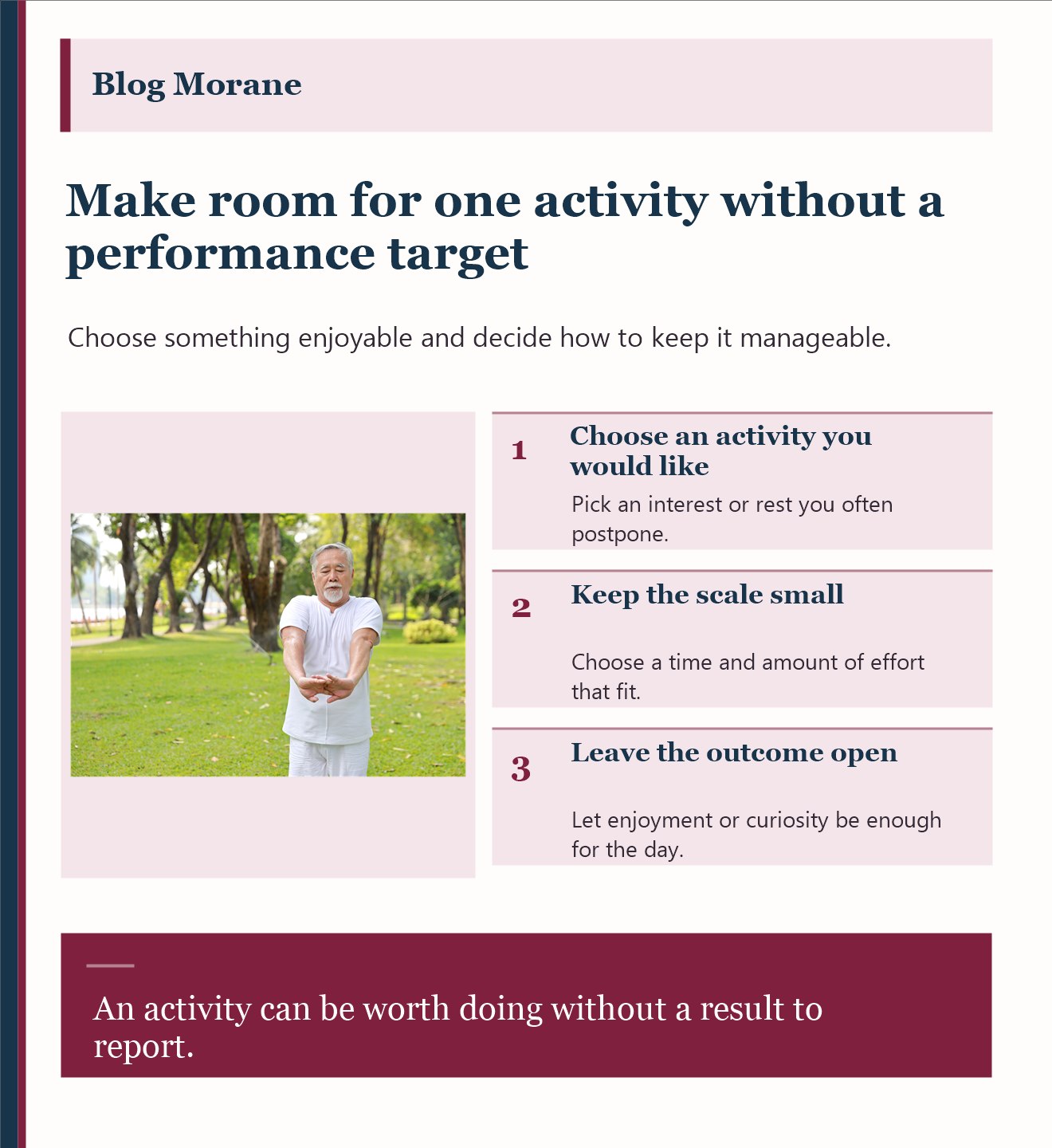
Read the infographic in text
Make room for one activity without a performance target
Choose something enjoyable and decide how to keep it manageable.
- Choose an activity you would like Pick an interest or rest you often postpone.
- Keep the scale small Choose a time and amount of effort that fit.
- Leave the outcome open Let enjoyment or curiosity be enough for the day.
An activity can be worth doing without a result to report.