

You can use an affirmation or intention to remind yourself of the kind of relationship you want: one with respect, interest and room to be yourself. Choose words that express a value you care about, then consider a practical action that would support it.
Staying hopeful does not require feeling cheerful all the time. Disappointment, loneliness or worry do not make you less worthy of love. Positive thinking cannot decide another person’s feelings or guarantee when a relationship will happen, so keep room for uncertainty and mutual choice.
On this page
Choose encouraging words you can believe
A useful statement can be modest and specific: “I can take time to get to know someone,” or “My needs deserve consideration.” You do not have to promise yourself a perfect partner or repeat words that feel false.
If affirmations are part of a personal or spiritual practice you value, choose language that fits your beliefs while respecting both people’s choices. The intention can be yours even when the outcome is uncertain.
Make room for difficult feelings
You may feel hopeful one day and discouraged the next. Notice the feeling without turning it into a prediction about your future or a judgment about your worth.
The NHS guide to relationships and mental wellbeing suggests neutral, realistic alternatives when constant positivity does not feel believable. “That date was disappointing, and I can decide what I need next” may be more useful than forcing yourself to call it wonderful.

Connect an intention to an action
Choose something available to you. If you value connection, you might make time for a conversation or an activity you already enjoy. If you value clarity, you might ask directly about what someone wants from dating.
Keep the step manageable and optional. Taking action can create an opportunity to learn about someone; it cannot make a particular person become interested or ready for commitment.
Notice how you are treated
Pay attention to whether your choices are respected, plans are workable and interest is reciprocal. Encouraging thoughts should sit alongside this information rather than explain it away.
You can appreciate good moments and still recognise a problem. Repeated insults, pressure or controlling behaviour deserve attention. Another person’s harmful actions are their responsibility; you did not attract them by having the wrong thoughts.
Leave room for either answer
You can express interest clearly, accept interest in return and respect a decline. A person’s answer is information about what is available between you; it is not a measure of your value.
Keep a boundary when someone does not want the same arrangement. You do not have to keep pursuing them to prove your belief in love, or accept a situation that repeatedly leaves your needs unmet.
Keep other parts of life available
Stay connected with friendships, interests, rest and support where you can. Dating can be one part of your life without becoming a daily test of whether your intentions are working.
Review what helps you feel clearer and act in ways you respect. You can change an affirmation, pause dating or ask for support. You do not have to become perfectly confident or completely healed before you deserve care.
Pair an encouraging thought with a choice you can make
If you feel tense before meeting somebody, try “I can find out whether I like the conversation.” Then choose a short plan with your own way home and a time that fits you. The useful thought gives you something you can act on.
If the date is uncomfortable, the same approach lets you say so and leave. You can remain hopeful about future connection while taking the experience in front of you seriously.
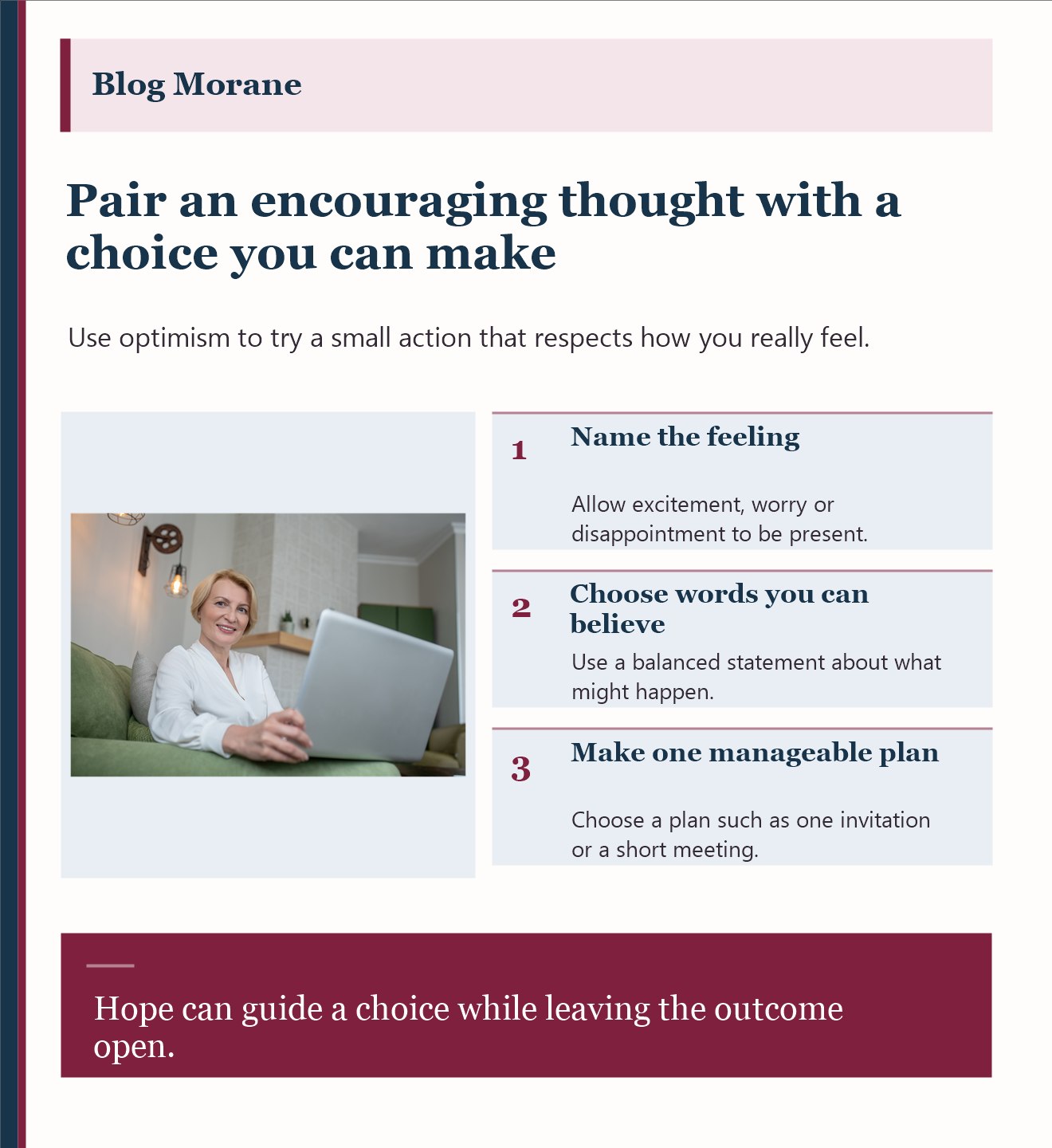
Read the infographic in text
Pair an encouraging thought with a choice you can make
Use optimism to try a small action that respects how you really feel.
- Name the feeling Allow excitement, worry or disappointment to be present.
- Choose words you can believe Use a balanced statement about what might happen.
- Make one manageable plan Choose a plan such as one invitation or a short meeting.
Hope can guide a choice while leaving the outcome open.