

A hurtful relationship can affect how you feel about getting close to someone new. You might notice worry when a message goes unanswered, feel uncertain about promises or prefer more time before sharing personal information. Those reactions do not give an online article enough information to diagnose you.
You can take your concerns seriously while getting to know what is happening now. Trust can develop through choices, clear agreements and observed behaviour. You do not owe anyone immediate confidence, complete disclosure or a relationship simply because they would like one.
On this page
Name the concern you have now
Try describing the specific fear: “I worry that plans will change without warning,” or “I am afraid that something important is being hidden.” Notice whether something in the present triggered it or whether it echoes an earlier experience.
Write down what you know and what remains uncertain. “I have not heard back yet” leaves room for more than one explanation. You do not need to replace a frightening assumption with a comforting story that you also cannot verify.

Notice present behaviour over time
Look at whether the person keeps agreements, accepts a no and responds honestly to reasonable questions. An apology or an affectionate evening can matter, but so can what happens afterwards.
Give new information a fair hearing without overlooking repeated disrespect. Our guide to dating honesty and clear agreements offers ways to discuss uncertainty without treating privacy as proof of deception.
Choose a pace that suits you
Start with commitments and conversations that feel manageable. You might prefer a shorter date, a public place or more time before making future plans. Explain a limit when it would help, without feeling obliged to share the full story behind it.
The other person can decide whether the pace works for them. You can also change your mind. A relationship should leave both people free to choose, including choosing not to continue.
Say what would help
Ask for a specific, practical action: “Could you let me know if you will be late?” or “Can we talk about what exclusivity means to each of us?” Leave room for an answer and an honest discussion of what is realistic.
A clear request differs from demanding access to someone’s phone, testing their loyalty or tracking them. If the arrangement available does not meet your needs, you can step back rather than trying to remove all uncertainty through surveillance.
Use fairer self-talk without dismissing yourself
When a broad conclusion appears, such as “Everyone will betray me,” consider a statement that leaves room for the facts: “I have been hurt before, and I can take time to notice how this person treats me.” You do not have to feel positive about every situation.
The NHS guide to relationships and mental wellbeing discusses balanced thinking, communication and support. Reflection can help you consider a concern; it should not become a reason to ignore threats, coercion or an agreement that has actually been broken.
Find support without blaming yourself
If worry, distress or recurring memories are affecting daily life, consider speaking with a qualified health professional or counsellor. You can also ask a trusted person outside the relationship to help you think through a specific concern.
Looking back can help you identify needs or boundaries you want to protect now. It does not make you responsible for someone else’s deception or abuse. You do not have to date again on a deadline, and you can seek specialist safety support before deciding what to do about a harmful situation.
Give early trust a small, observable step
If an old hurt makes you uncertain about a new date, choose a simple agreement such as confirming a time before you travel. Let what they do with that agreement give you information while keeping your own privacy and plans.
If they repeatedly push past a limit, take the new behavior seriously. You can slow contact or talk privately with someone who can help you think about safety and choice.
Read the infographic in text
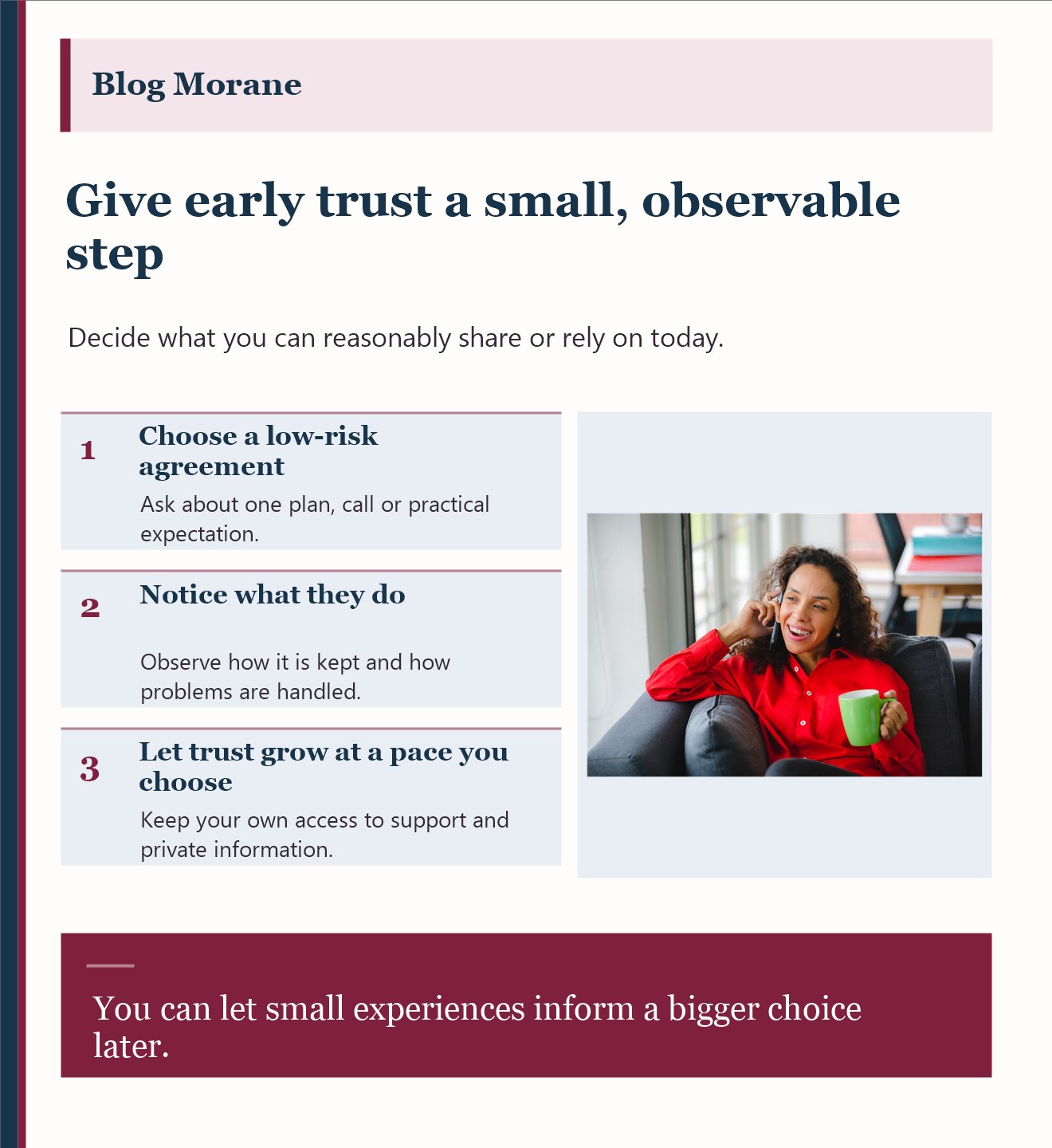
Give early trust a small, observable step
Decide what you can reasonably share or rely on today.
- Choose a low-risk agreement Ask about one plan, call or practical expectation.
- Notice what they do Observe how it is kept and how problems are handled.
- Let trust grow at a pace you choose Keep your own access to support and private information.
You can let small experiences inform a bigger choice later.