

Jealousy can show up around a relationship, a friendship, an opportunity or something another person has. It can be uncomfortable to feel, and it can be difficult to respond when someone directs hurtful comments towards you.
Start with what you can observe and choose. You can take your own feelings seriously, ask a clear question and set limits around behaviour without deciding that you know exactly what another person thinks.
On this page
Separate what happened from your interpretation
A friend gave a short reply when you shared good news. That is something you noticed. “They cannot stand my success” is an interpretation. They might be distracted, disappointed about something in their own life or unsure what to say. You may not yet know.
Look for specific actions rather than clues you have to decode. Did the person make a dismissive comment? Was an agreement broken? Did you feel left out of a plan? Describe that event clearly before deciding what you want to do about it.
You can address an unkind remark even when its motive remains uncertain. Equally, another person’s quiet reaction does not automatically require an explanation or a confrontation. Consider whether there is a practical issue to discuss.

Give your own feelings a pause
If you feel jealous, allow a little space before sending a message, making an accusation or comparing yourself aloud. Put an unfinished message aside or step away from a social feed for a while. Choose a pause that fits the situation.
Ask what you are wanting: more time with someone, recognition for your effort, a similar opportunity or reassurance about an agreement. Naming the wish can make your next step clearer. It does not mean the other person must provide everything you want.
Someone else’s achievement may show you something you would like to explore. You could ask how they found an opportunity or choose a manageable action towards your own goal. You can also feel disappointed without immediately turning it into a project to improve yourself.
You are responsible for what you do with the feeling. Checking messages without permission, making repeated accusations or demanding that someone drop a friendship is not a fair way to seek reassurance.
Ask for something specific
Choose a conversation when you both have room to speak. Begin with the action and the request: “When my news was turned into a joke, I felt hurt. Please leave that joke out when we talk about work.” This gives the other person something concrete to respond to.
If you feel left out, you might say: “I miss spending time together. Would you like to arrange something next week?” An invitation leaves room for a yes, a no or another suggestion. It does not require the person to justify all their other relationships.
Listen to the response without treating agreement as guaranteed. The person may explain a misunderstanding, acknowledge the remark or see the situation differently. You can decide what works for you after hearing them.
Keep the conversation about a manageable issue. Listing every past disappointment can make it harder to work out the request you are making now.
Respond to put-downs and protect your privacy
You can enjoy an accomplishment without making yourself smaller to manage someone else’s reaction. Choose how widely you want to share the news and what details you want to keep private. You do not owe anyone your income, passwords or private relationship conversations.
If a remark continues, state what you will do: “I am happy to talk about something else, but I will leave this conversation if the insults continue.” Choose a limit you can follow through on. You can end a conversation without proving that jealousy caused it.
Consider the setting too. A group chat, a busy family gathering or a work meeting may not be the place for a personal discussion. You can defer the topic, share less or spend time with people who treat you considerately.
You are not required to coach someone through their feelings or persuade them to celebrate with you. Offering help is a choice, and it can have limits around time, information and energy.
Review the pattern and choose support
After a conversation or a boundary, notice what actually changes. A person who listens and adjusts gives you different information from someone who repeats the same put-downs. Choose your next step from the pattern you observe.
If jealousy keeps interfering with your day or affects how you treat others, Ireland’s Health Service Executive offers further guidance on dealing with jealousy and considering support. A qualified professional can be an option when working through it alone feels difficult.
If someone’s response includes threats, intimidation or monitoring, prioritise your safety and seek confidential individual support. You do not need to arrange a confrontation to establish the reason for their behaviour.
Read the infographic in text
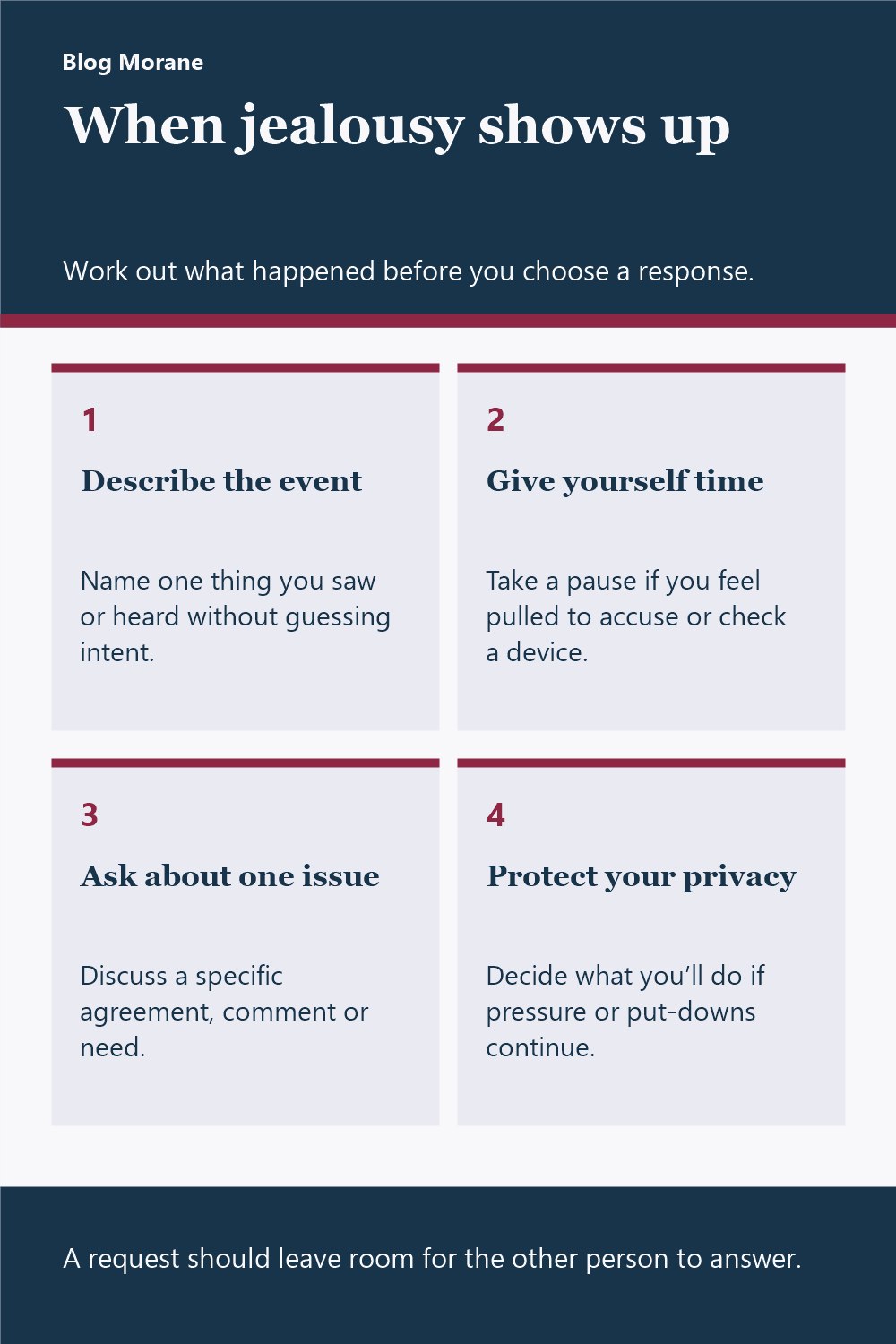
When jealousy shows up Work out what happened before you choose a response.
- Describe the event Name one thing you saw or heard without guessing intent.
- Give yourself time Take a pause if you feel pulled to accuse or check a device.
- Ask about one issue Discuss a specific agreement, comment or need.
- Protect your privacy Decide what you’ll do if pressure or put-downs continue.
A request should leave room for the other person to answer.