

Separation and divorce can involve grief, uncertainty and a long list of practical decisions. You may want to reduce conflict while also protecting your time, resources and family’s needs. You cannot control how another person responds, so focus on the steps and support available to you.
There is no single model of a “good” divorce. Some people can cooperate closely; others need firm boundaries, professional help or limited contact. Start with immediate needs and get advice suited to your circumstances before making commitments about money, property or children.
On this page
Put safety before direct cooperation
If there has been violence, intimidation, stalking or controlling behaviour, discuss safety with a specialist service and a qualified local legal adviser. You do not need to meet alone or negotiate directly to show that you are being reasonable.
Tell any professional helping with arrangements about those concerns. A process that relies on equal bargaining power or frequent contact may not be appropriate. If anyone is in immediate danger, contact local emergency services.

Sort immediate needs from longer decisions
Make a short list of what needs attention now: somewhere safe to stay, essential expenses, children’s daily care, upcoming appointments and access to information you need. Mark any deadlines that require advice promptly.
Keep questions you cannot answer in a separate list. You do not have to resolve every future holiday or shared possession in one conversation. Ask a trusted person for a specific kind of help, such as organising paperwork or accompanying you to an appointment.
Get local legal advice before agreements
Find out which decisions affect your rights and responsibilities where you live. Ask a family-law adviser about documents, deadlines, financial disclosure and how proposed arrangements should be recorded. An informal understanding may not settle every legal issue.
Before signing an agreement, make sure you understand its terms and implications. A conversation about the relationship is different from advice about a legally binding commitment. Keep your records organised and follow professional guidance on what information is needed.
Choose a workable communication plan
When contact is safe, consider a clear channel and a reasonable time for routine messages. Keep each message focused on one practical issue, such as a collection time or a bill that needs attention.
You can pause a heated discussion and return to the practical question later. If direct contact is unsafe or repeatedly unproductive, ask your adviser about appropriate alternatives. You do not need to remain friends or discuss private aspects of your new life.
Consider mediation with the right support
Mediation uses a neutral person to help people discuss an agreement. It does not mean that the mediator becomes your legal adviser or can force you to accept a proposal.
The Department of Justice Canada’s guide to parenting arrangements explains mediation and the value of independent legal advice before finalising an agreement. It also notes that mediation may be unsuitable when family violence creates ongoing safety concerns. Ask about the options and safeguards relevant to your location and circumstances.
Focus on children’s needs
If you have children, explain changes in an age-appropriate way and reassure them that the separation is not their fault. Listen to their questions without asking them to take sides, carry adult messages or decide the outcome of a disagreement.
Think about everyday routines, school, activities, important relationships and safe arrangements for communication or transitions. The Justice Canada guide to parenting after separation offers practical communication ideas and recognises that close cooperation may be inappropriate where safety is a concern.
Joint celebrations and family holidays are choices to consider carefully, not milestones you must reach. Seek guidance when you are unsure how to support a child through the changes.
Build support for the transition
Use support for different needs: a legal adviser for legal decisions, someone you trust for practical help and an appropriate counsellor if you want emotional support. You do not have to rely on your former partner to help you process the end of the relationship.
Progress may look like one clearer arrangement, one completed task or getting help with a difficult decision. It need not look friendly from the outside to be a thoughtful step towards a more workable life.
Sort the first separation decisions by urgency
If separation is likely to affect where you sleep or who collects a child tomorrow, make a short list of what cannot wait. Put legal and financial questions on a separate list so you can ask a qualified local adviser about them before agreeing to any change.
If threats or monitoring are a concern, use a safe route to seek advice first. Ontario’s Family Law Information Centres can explain available information and referrals for people in Ontario. Other places have different processes and support options.
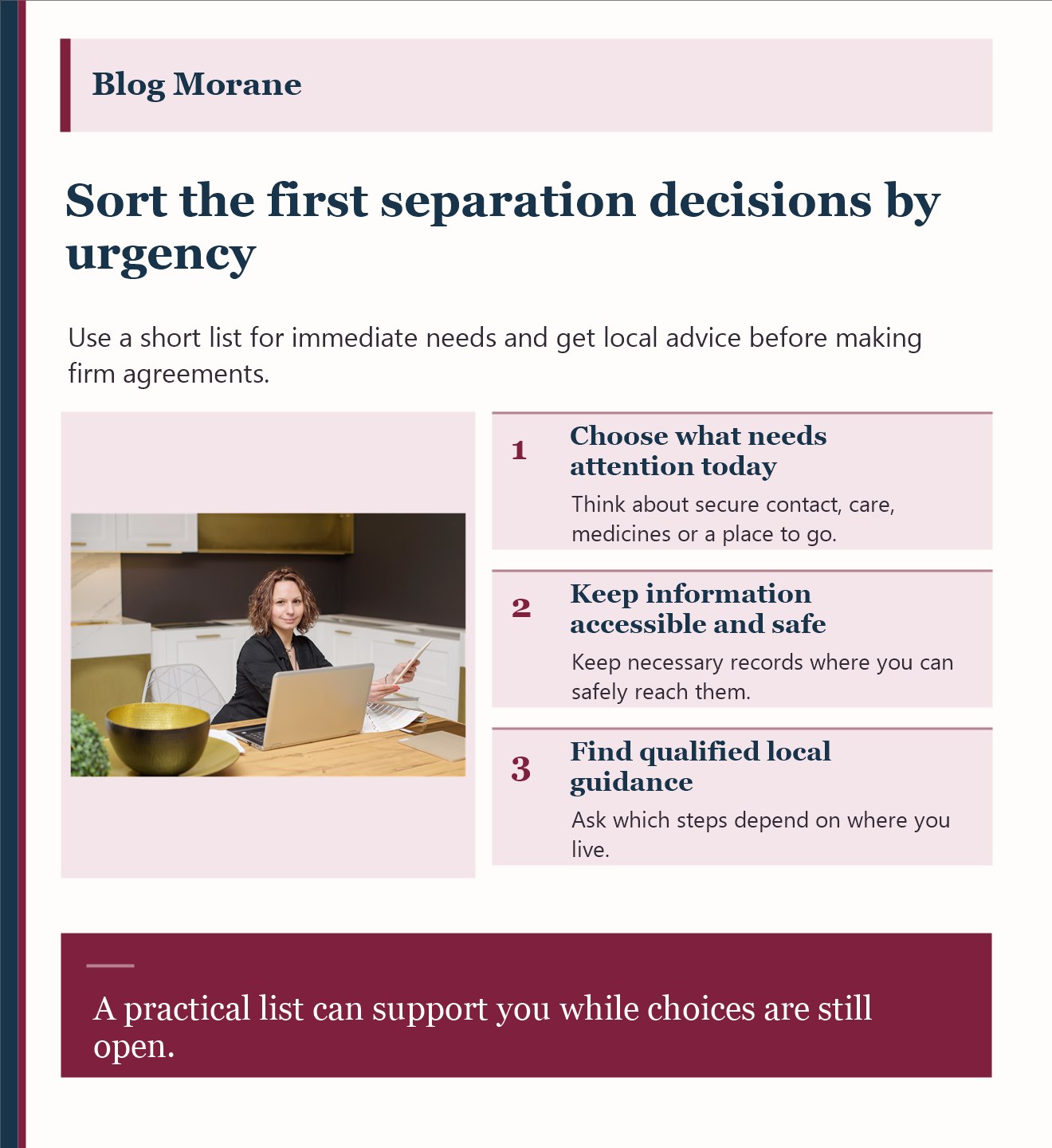
Read the infographic in text
Sort the first separation decisions by urgency
Use a short list for immediate needs and get local advice before making firm agreements.
- Choose what needs attention today Think about secure contact, care, medicines or a place to go.
- Keep information accessible and safe Keep necessary records where you can safely reach them.
- Find qualified local guidance Ask which steps depend on where you live.
A practical list can support you while choices are still open.
Frequently asked questions
1. What should I work out first when a separation may happen?
Consider immediate safety, where people can stay, essential expenses and any arrangements for children. Write down which decisions need attention now and which can wait for advice.
2. Do I have to meet in person to discuss arrangements?
Choose a way of communicating that fits your safety and situation. If there are threats, intimidation or monitoring, seek independent advice before arranging direct contact.
3. What can I prepare before speaking to a family-law adviser?
Bring a short list of your questions and relevant information you can safely access. Ask what documents or details the adviser needs and how to send them securely.
4. Where can I find basic information in Ontario?
Ontario’s Family Law Information Centres offer information and referrals. Check the province’s current service information and ask whether you need an appointment or another local resource.
5. How should I explain an upcoming change to a child?
Use clear, age-appropriate information about arrangements that are confirmed. Focus on what they can expect, give them room to ask questions and keep adult disagreements separate from their role.