

When you care about someone, uncertainty about their intentions can be difficult to sit with. You may want to know whether they want a relationship, whether you are exclusive or whether you can rely on what they tell you. Those are reasonable questions to discuss.
A guarded phone, a delayed reply or an unfamiliar friend cannot settle those questions on its own. Start with what you know, make your own expectations clear and notice how the person responds over time. You can decide a situation does not work for you without proving a hidden motive.
On this page
Name what you want from dating
Ask yourself what matters now: a committed relationship, casual dating, exclusivity or time to get to know someone. Be honest about your own uncertainty too. Your preferences can guide a conversation without becoming a demand for a particular answer.
If they say they do not want commitment, take that statement seriously. You can accept what is offered or decide it does not suit you. They do not have to justify declining a relationship, and you do not have to stay while hoping they change.

Discuss the agreement directly
You could ask, “Are you interested in an exclusive relationship, or do you want to keep dating other people?” Explain what exclusivity would mean to you rather than assuming you share a definition.
If the answer is unclear, ask one concrete follow-up. A label can be useful, but the practical agreement matters too. If either person does not want the same arrangement, recognise the difference instead of treating agreement as something to win.
Look at actions and patterns
Notice whether plans are usually kept, explanations fit what you know and agreed boundaries are respected. An occasional mistake differs from repeated deception or promises that are repeatedly broken. Context and the effect on you both matter.
Describe the concern precisely: “You said you had cancelled the plan, but I later learned it went ahead.” Ask for an explanation if that feels safe and useful. Avoid turning every late message or change of mood into evidence for a conclusion you already fear.
Respect privacy while asking for honesty
A relationship can include honesty and personal privacy. Private conversations, independent friendships and time alone do not automatically indicate cheating. Do not demand passwords, secretly check messages or track a person to resolve uncertainty.
The love is respect guide to healthy relationships includes space and privacy alongside communication and mutual respect. Discuss the information you need for a shared decision while respecting each person’s autonomy.
Respond to a broken agreement
Explain what happened, how it affected you and what you need to decide next. You can take time before answering an apology. Repair may involve a specific change and consistent follow-through; a promise alone cannot restore trust on a deadline.
You may choose to continue, change the arrangement or end contact. Forgiveness and another chance are separate choices. For practical ways to express a limit, read our guide to caring without losing your boundaries.
Make a choice you can live with
Consider what the relationship is like now, not only what it could become. Can you discuss needs, accept each other’s answers and feel free to make your own choices? Repeated uncertainty can be enough reason to step back, even when you cannot prove dishonesty.
If questions lead to threats, intimidation or punishment, prioritise safety and seek support from someone you trust or a specialist service. You do not need to confront someone or gather more proof before asking for help.
Check whether two people mean the same thing by an agreement
Two people can say they want honesty while assuming different things about whether to share future dating plans. Ask “If one of us wants to see someone else, what do we agree to tell each other?” Make room for both people to say what information affects their decisions.
Follow the agreement or ask to revisit it before acting differently. You can keep someone else’s details private while providing the information you each need.
Read the infographic in text
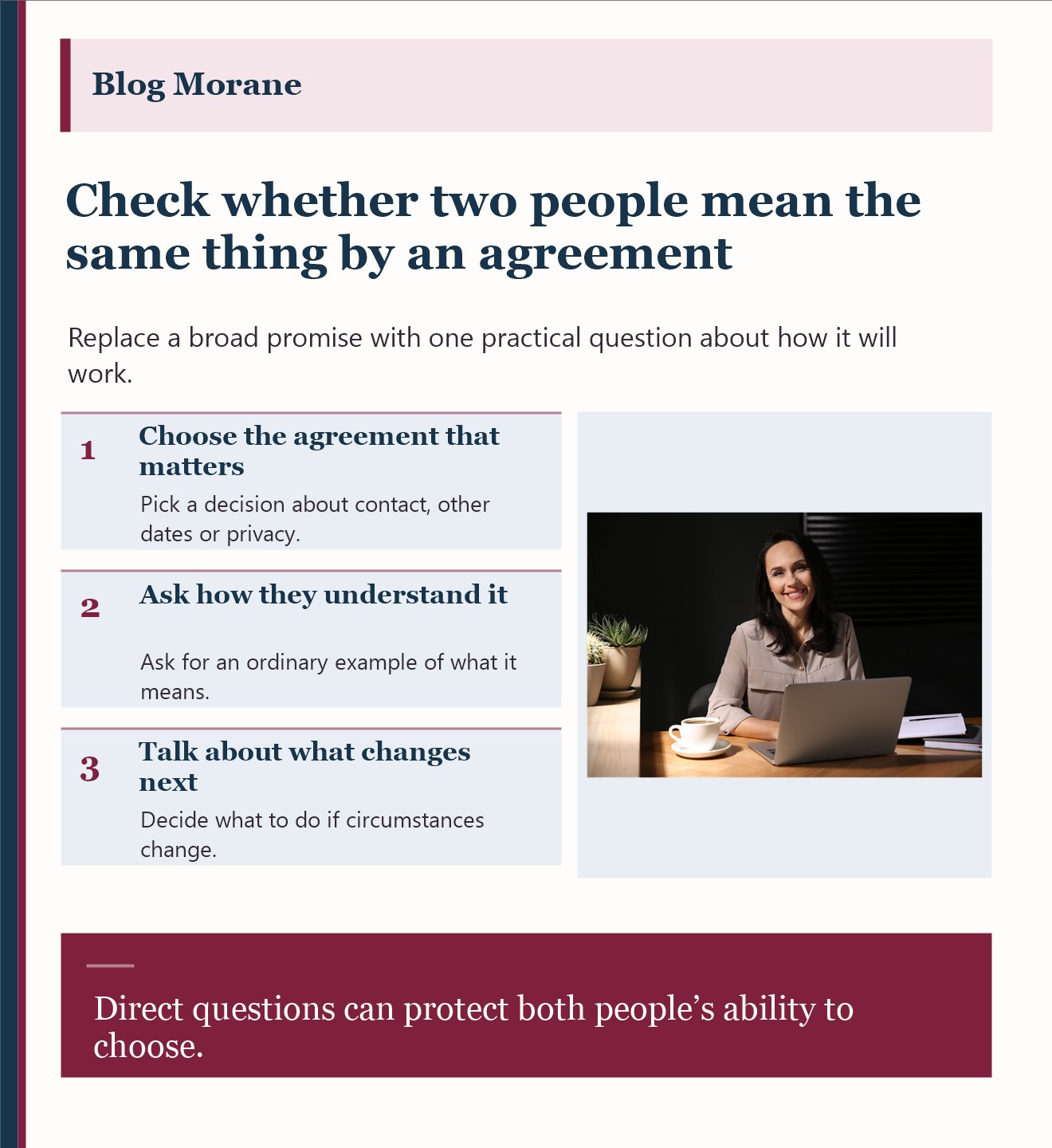
Check whether two people mean the same thing by an agreement
Replace a broad promise with one practical question about how it will work.
- Choose the agreement that matters Pick a decision about contact, other dates or privacy.
- Ask how they understand it Ask for an ordinary example of what it means.
- Talk about what changes next Decide what to do if circumstances change.
Direct questions can protect both people’s ability to choose.