

A first date gives you a chance to discover whether you enjoy each other’s company and want another meeting. You can show interest, ask questions and share something of yourself without trying to earn someone’s approval or make a particular impression last.
Some nerves are understandable. Plan for comfort and freedom to choose, then pay attention to how the conversation feels. You do not owe a smile, physical affection or another date, and neither does the person you are meeting.
On this page

Choose a plan that works for you
Agree on a place, time, approximate length and budget before you meet. A public setting and your own way home can give you more room to leave when you choose. Consider access, noise, dietary needs and transport rather than assuming one kind of date suits everyone.
For a new contact, keep your home address and other private details to yourself until you are comfortable sharing them. Tell someone you trust where you plan to be if that would help. Precautions can reduce some risks; responsibility for harmful behaviour remains with the person who causes it.
Prepare for comfort rather than a performance
Wear something that suits the setting and feels comfortable. Leave time for the journey and any practical needs. If you want to do something that helps you settle beforehand, choose it because it helps you, not because a certain appearance or posture is required.
You can be quiet, animated, nervous or thoughtful. A genuine connection has room for different communication styles. Do not use alcohol or anything else to push past a limit you would prefer to keep.
Share something and ask something
Start with a topic you can enjoy discussing: a favourite meal, an interest you have returned to or something you would like to learn. Offer a little of your own answer, then ask an open question and listen to theirs.
For example, “I have been trying a new walking route. What do you like doing when you have a free afternoon?” Follow their answer rather than working through a fixed interview. Both people should have opportunities to speak, pause and change the subject.
Be honest while keeping your privacy
You do not have to present every part of life positively or share your full history. You can say, “Work has been a bit difficult, but I would rather save the details for another time.” It is fine to decline a personal question or ask for a different topic.
Share relationship intentions when they are relevant and you feel ready. Be clear about important commitments that affect dating. A first meeting does not create a right to someone’s medical, financial or sexual history.
Notice how your choices are treated
Pay attention to whether they listen, accept a different preference and respect a no. Chemistry can be enjoyable, but it cannot replace those basics. You can change your mind about touch, a location or how long to stay.
The love is respect guide to boundaries offers prompts for recognising and expressing personal limits. If someone pressures, belittles or frightens you, you can end the date and seek help. You do not have to debate your reasons.
End the date clearly
Leave when you planned to, or earlier if you wish. “Thank you for meeting me; I am heading home now” is enough. You do not need to stay longer to be polite or leave early as a tactic to create interest.
If you want another date, you can say so simply. If you are unsure, take time to think without promising something you do not want. Only offer to keep in touch if that reflects your actual intention.
Decide what you want next
Ask yourself: Did I feel able to be myself? Did we show interest in each other? Were my choices respected? Would I like to spend more time together? You can choose another meeting, decline or recognise that you need more information.
A brief message such as “Thank you for meeting. I do not feel a romantic connection, so I will not arrange another date” can be clear and kind when contact feels safe. If they decline, accept their answer. A first date can be worthwhile even when the next step is to move on.
Make a first date comfortable enough for an honest choice
If you’ve only spoken online, suggest a café or daytime park visit where you can each arrive and leave independently. Tell a trusted person the plan if it would help and choose how much personal information you want to share.
During the date, notice whether you feel able to speak and make choices. You may decide to extend a pleasant visit or keep the original end time and decide later about seeing the person again.
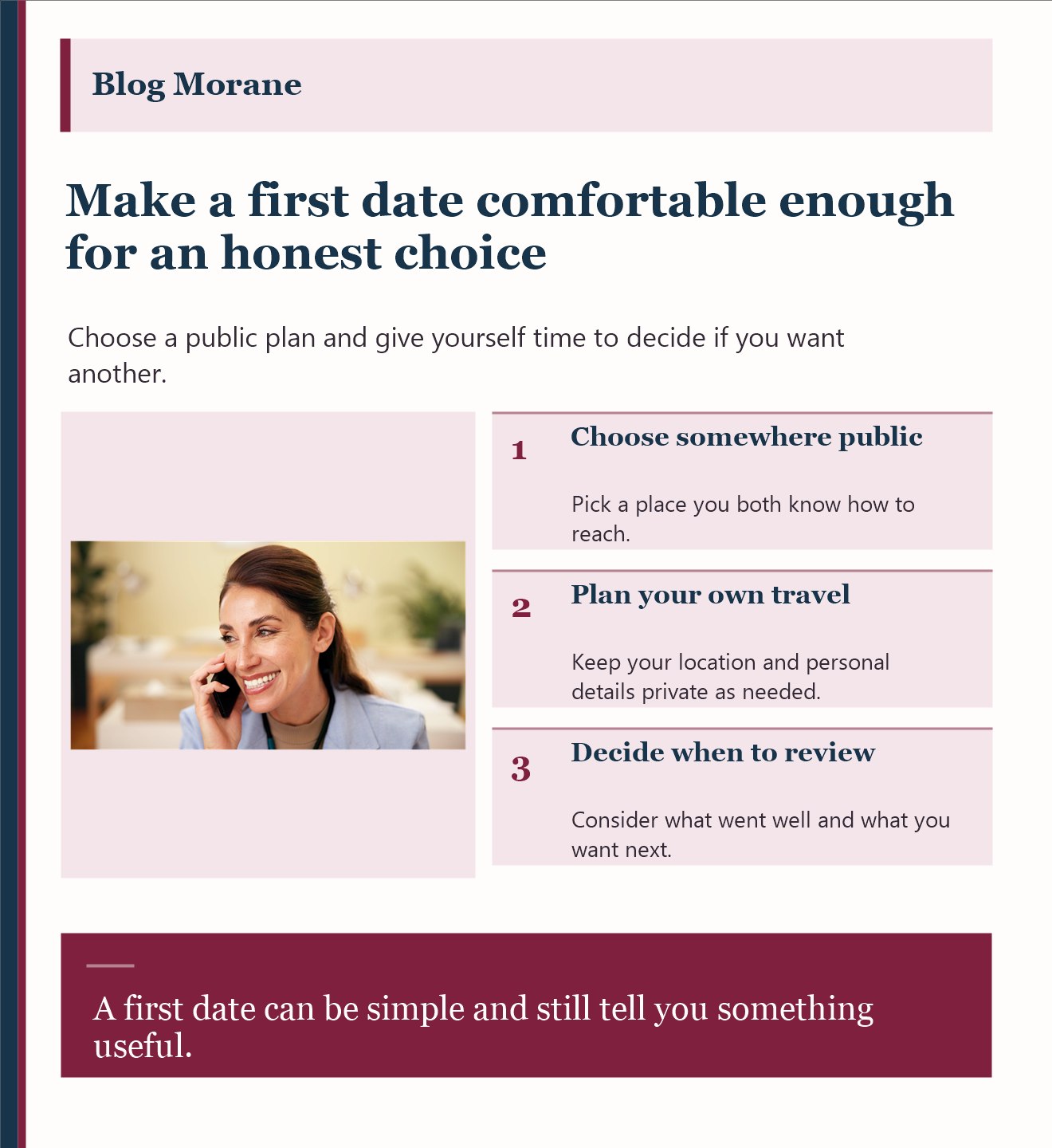
Read the infographic in text
Make a first date comfortable enough for an honest choice
Choose a public plan and give yourself time to decide if you want another.
- Choose somewhere public Pick a place you both know how to reach.
- Plan your own travel Keep your location and personal details private as needed.
- Decide when to review Consider what went well and what you want next.
A first date can be simple and still tell you something useful.